
Evening digest: Trump's Hormuz toll plan lifts oil as SpaceX stock slides
AI Sentiment: 18/100 Bearish
This score is generated through AI-driven analysis of the article's content.

powered by

Buy USO (or buy Brent via BNO) to profit from the renewed Strait of Hormuz blockade and the 20% toll risk. The market is repricing near-term supply disruption: oil jumped 9%+ on the announcement, and the strait moves ~1/5 of global oil/LNG. Even if the fee is later challenged, the headline alone keeps shipping uncertainty high and supports higher crude prices.
Key Risk: A fast diplomatic de-escalation that restores normal Iranian shipping and collapses the supply-risk premium.
Buy SpaceX (SpaceX stock) after the selloff. The news is macro-driven (oil up, risk assets down), but the article’s own analyst notes SpaceX’s durable edge: reusable launch leadership, Starship, Starlink, and AI infrastructure. The stock is sliding toward the IPO price while major banks still set very high targets, creating a valuation dislocation if the macro shock fades.
Key Risk: A real, company-specific setback (Starship/launch cadence, regulatory, or Starlink/AI execution) that breaks the long-term growth thesis.
- Trump revives Iran blockade and proposes 20% Hormuz cargo fee.
- Oil jumps, gold falls as Hormuz tensions lift inflation concerns.
- SpaceX stock drops again despite analysts maintaining a bullish outlook.
President Donald Trump announced the reinstatement of a US blockade on Iranian shipping and proposed a 20% charge on cargo transiting the Strait of Hormuz.
Oil prices surged as markets assessed renewed risks to global energy supplies, while gold fell on expectations that higher energy costs could keep US interest rates elevated.
Meanwhile, SpaceX shares extended their recent decline despite analysts maintaining a bullish long-term outlook.
Trump to restart Iran blockade and impose 20% toll
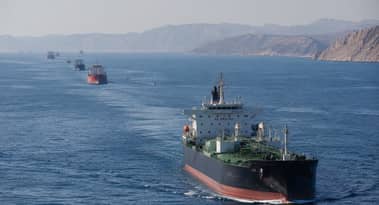
President Donald Trump announced on Monday that the United States would reinstate its blockade of Iranian ships using the Strait of Hormuz and seek reimbursement equal to 20% of cargo shipped through the strategic waterway.
In a post on Truth Social, Trump said the Strait of Hormuz "will remain OPEN, with or without Iran" and declared that the United States would become the waterway's "GUARDIAN."
He added that while Iranian ships would be blocked from entering or leaving, other nations would retain access but would be required to reimburse the US for providing security.
US Central Command later said military forces would resume blockading traffic to and from Iranian ports and coastal areas beginning July 14 at 4 p.m. New York time.
The White House did not provide details on how the proposed fee would be implemented or whether it had been discussed with US allies in the Gulf.
The announcement drew concern across the shipping industry, with market participants saying the proposal raised significant uncertainty over future trade flows.
Iran also warned it would not allow the US to interfere in management of the strait and described the interim agreement between the two countries as entering a "crisis phase."
The proposal also faces potential legal hurdles.
The International Maritime Organization reiterated its opposition to mandatory transit fees for international straits, noting that international law generally guarantees the right of passage through such waterways.
Oil prices jump on supply concerns
Crude oil prices rallied after Trump's announcement renewed concerns about energy shipments through one of the world's most important maritime chokepoints.
Brent crude rose more than 9% to around $83 per barrel, while West Texas Intermediate climbed more than 9% to about $77.87 per barrel.
Analysts said the combination of renewed restrictions on Iranian maritime traffic, military exchanges and reduced vessel movements through the Strait of Hormuz increased concerns over near-term supply availability.
The Strait of Hormuz handled roughly one-fifth of global oil and liquefied natural gas shipments before the conflict escalated earlier this year.
Looking further ahead, Goldman Sachs said expanding pipeline capacity across the Middle East could allow more than 60% of Gulf oil exports to bypass the Strait of Hormuz by the end of 2028, reducing reliance on the waterway.
Gold prices retreat as rate concerns return
Gold prices posted their second consecutive daily decline as rising oil prices revived inflation concerns and strengthened expectations that the Federal Reserve could maintain higher interest rates.
Spot gold fell about 2.9% to around $3,998 per ounce, while US gold futures settled approximately 2.67% lower at $4,003.80.
Market participants said higher oil prices could increase inflationary pressures by raising transportation and energy costs across the economy, potentially delaying monetary policy easing.
According to CME Group's FedWatch Tool, traders now see a 75% probability that the Federal Reserve will raise interest rates in September.
Investors are also awaiting key US economic data this week, including the Consumer Price Index, Producer Price Index, retail sales figures and weekly jobless claims, alongside Fed Chair Kevin Warsh's first congressional testimony on monetary policy.
SpaceX stock extends decline despite bullish analyst outlook
SpaceX shares fell for a second consecutive trading session on Monday, declining more than 4% to around $139.
The stock moved closer to its $135 initial public offering price after an early rally following its June Nasdaq debut.
The broader market also came under pressure after Trump's announcement on the Strait of Hormuz.
Despite the pullback, Bernstein reaffirmed its Buy rating on SpaceX with a $239 price target, implying upside of more than 70% from current levels.
The brokerage said SpaceX continues to lead the reusable launch market despite China's recent successful landing of a Long March 10B rocket booster.
Analysts also pointed to the company's fully reusable Starship program, Starlink satellite network and artificial intelligence infrastructure opportunities as key long-term growth drivers.
Raymond James has published a price target of $800 per share, while Citigroup outlined a bull-case valuation of roughly $12 trillion.

Why SpaceX stock is up around 1% on Friday

Should you buy the dip in OKLO stock today?

Analyst: Adobe stock's post-earnings dip isn't about AI disruption fears only

Dow surges 500 points after four-day slide as oil prices retreat

Here’s why the Enbridge stock is in a strong downward trend
No results found
Loading articles...
Failed to load articles. Please try again.