
Tesla stock’s Terafab shock: is Elon Musk building future or a $17 billion trap?
AI Sentiment: 35/100 Bearish
This score is generated through AI-driven analysis of the article's content.

powered by

Buy TSLA. The news is a credible attempt to break the chip bottleneck for Optimus and AI spacecraft, and Intel’s involvement lowers tech risk versus a pure “Musk dream.” If Terafab ramps, Tesla gains faster iteration cycles and less supplier/geopolitical disruption—directly improving autonomy/robotics timelines and reducing long-run component leverage.
Key Risk: Terafab funding and ownership stay unclear, forcing Tesla to pay most of the bill (or take losses) while SpaceX captures most of the output.
Buy INTC. Intel’s role is the missing piece that can turn Terafab from a concept into manufacturable output (process-node execution and advanced packaging). If Terafab places real equipment orders and yields improve, Intel benefits from higher demand for its manufacturing know-how and potential supply/partner economics.
Key Risk: Intel’s participation is mostly advisory or limited, and Terafab fails to reach commercially acceptable yields or volume by the stated milestones.
- Tesla and SpaceX commit $16.8B to the first phase of the Terafab project.
- Analysts warn Terafab’s final cost could dwarf its initial investment.
- Tesla investors lack clarity on funding, ownership and output allocation.
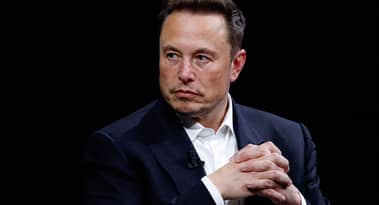
Tesla stock NASDAQ:TSLA closed 1% lower at $319.53 on Thursday as Elon Musk revealed the extraordinary scale of the company’s next industrial gamble.
Tesla and SpaceX will initially invest $16.8 billion in Terafab, a 100-million-square-foot semiconductor complex in Grimes County, Texas.
The plant is designed to manufacture, package and test advanced logic and memory chips under one roof, eventually supporting more than one terawatt of computing demand.
Musk estimates that roughly 25% of its output could serve Tesla’s Optimus robots, with about 75% directed towards SpaceX’s planned AI spacecraft.
Terafab targets real bottleneck, but $17 billion is only entry price
Musk argues that existing suppliers cannot expand quickly enough to meet the future needs of Tesla’s autonomous vehicles, humanoid robots and SpaceX’s orbital computing network.
Producing logic chips, memory and advanced packaging in one location could shorten design cycles and reduce reliance on suppliers concentrated in East Asia.
It may also protect Musk’s companies from geopolitical disruption and lengthy delivery schedules.
The headline investment is not a final budget.
SpaceX said future phases could push spending much higher, while a May filing estimated that the fully expanded project could cost as much as $119 billion.
Musk has described the first 3,000 jobs as belonging only to phase one of ten.
Morgan Stanley analysts led by Andrew Percoco called the undertaking a “Herculean task”, Business Insider reported.
They estimated that a facility producing 100,000 leading-edge logic wafers each month could cost up to $45 billion. UBS separately estimated roughly $30 billion for that initial capacity.
Intel reduces the technology risk, but its role remains unclear
Tesla and SpaceX understand chip design and large-scale manufacturing.
High-volume semiconductor fabrication is a different discipline, requiring specialised equipment, scarce engineers and consistently strong production yields.
Bernstein analyst Stacy Rasgon told Business Insider that the project could be harder than sending rockets to Mars.
He warned that advanced lithography equipment can take years to secure and that combining logic, memory and packaging creates additional complexity.
Intel’s participation should bring process and packaging expertise.
Yet analysts noted that regulatory filings have not explained the contracts, intellectual-property arrangements, capital contributions, equipment commitments or division of responsibilities.
They also questioned whether the proposed 2029 production target refers to test chips, limited output or genuine high-volume manufacturing.
The next meaningful milestones are equipment orders, process-node commitments, staffing, trial wafers and commercially acceptable yields.
Tesla shareholders still need to know who pays
Tesla has already planned more than $20 billion of capital expenditure for 2026, excluding Terafab and other proposed projects.
Wedbush analyst Dan Ives said Tesla must explain which company will “bear the burden” of supplying billions of dollars for the project.
Baird analyst Ben Kallo similarly questioned the funding source and told Business Insider that outside capital could eventually be required.
The allocation of output adds another concern. Musk’s estimate suggests SpaceX could receive most of Terafab’s computing capacity.
That does not automatically disadvantage Tesla, but shareholders need clarity on ownership, construction costs, transfer pricing and intellectual property.
Dow holds weekly gain as Warsh inflation warning lifts rate hike bets
Workday stock jumps 5% after earnings beat, but analysts split on AI growth outlook

Evening digest: Warsh signals inflation fight, gold and oil slide
Trump administration eyeing stake in Venezuelan oil fields? Here's what we know

Why is Autodesk stock falling 4% despite Q2 earnings beat
No results found
Loading articles...
Failed to load articles. Please try again.