
Micron stock jumps 12%: what is driving the memory stock today

AI Sentiment: 78/100 Bullish
This score is generated through AI-driven analysis of the article's content.

powered by

Buy MU. BofA’s point is that open-weight Chinese AI models multiply customer-side memory demand: every deployment needs local HBM, not just centralized inference. That should support HBM pricing/volumes into the next AI capex cycle, and the stock has a clear catalyst window with big-tech earnings confirming AI infrastructure spend. Upside is reinforced by the buyback outlook once CHIPS Act limits ease around Dec 2026, enabling large repurchases off high free cash flow.
Key Risk: AI spending slows or shifts away from HBM-heavy workloads, cutting memory demand despite open-weight model growth.
Buy SK Hynix. If open-weight models truly expand total HBM consumption across more customer hardware, the whole HBM supply chain benefits, not just Micron. Hynix is the other primary HBM beneficiary, so it should capture the same demand narrative and any positive read-through from Alphabet/mega-cap AI capex guidance.
Key Risk: HBM supply ramps faster than demand (or customers qualify alternative memory), driving HBM margins down and negating the demand thesis.
- Micron jumps as BofA sees Chinese AI driving memory demand.
- BofA says open AI models create more demand for HBM chips.
- Investors eye Big Tech earnings for AI spending outlook.
Micron Technology Inc. (MU) shares surged 12% on Tuesday after Bank of America argued that the rapid emergence of low-cost, open-source Chinese artificial intelligence models could increase, rather than reduce, demand for memory chips.
The rally came ahead of a key week for the technology sector, with investors awaiting earnings from Alphabet and other major technology companies for updates on artificial intelligence spending that could influence demand for high-bandwidth memory (HBM).
In a note published Monday, Bank of America analyst Vivek Arya reiterated a Buy rating on Micron with a $1,550 price target, implying roughly 79% upside from the previous day's closing price.
The report coincided with the release of Moonshot AI's Kimi K3, a 2.8-trillion-parameter model that Bank of America described as the largest open-weight model ever built.
Open weight AI models could expand memory demand
According to Bank of America, open-weight AI models create broader demand for memory because each organization deploying the model must run it on its own hardware.
Unlike closed AI models that operate from centralized data centers, open models require enterprises, governments, and cloud providers to install model weights locally.
"Closed models consolidate memory demand; open models multiply it," Arya said.
The bank said every download of an open-weight model creates an additional customer-side memory requirement that would not otherwise exist.
Although Chinese AI companies are offering models at significantly lower prices, Bank of America said lower pricing reflects business strategy rather than lower hardware requirements.
The report noted that Kimi K3 charges $3 per million input tokens compared with $15 for Anthropic's Claude Opus 4.8, while some Chinese models are priced as much as 350 times below Western competitors.
Despite those lower prices, Bank of America estimated that running Kimi K3 still requires about 1.4 terabytes of high-bandwidth memory spread across at least 64 AI accelerators.
"Open LLMs such as Kimi K3 pose no threats to memory demand," Arya wrote.
"They require the same or more memory as their model weights and active parameters increase."
China competition and buyback outlook
Bank of America also addressed concerns about growing competition from Chinese memory manufacturers.
The firm said ChangXin Memory Technologies is expanding production but currently competes primarily in commodity DRAM rather than advanced HBM3E and HBM4 memory used in AI systems.
It also noted uncertainty over whether US equipment suppliers will receive approval to sell into the Chinese company.
Beyond AI demand, Bank of America highlighted another potential catalyst for Micron shares.
The firm expects restrictions on Micron's share repurchases under the CHIPS Act to expire around December 2026, potentially allowing the company to resume large-scale stock buybacks.
Arya estimated Micron could generate between $120 billion and $130 billion in annual free cash flow over the next several years.
Under a hypothetical 40% payout policy, that could translate into annual share repurchases of $50 billion to $60 billion, or roughly 5% to 6% of the company's projected market capitalization each year.
Micron and SK Hynix shares also gained ahead of earnings from major technology companies, beginning with Alphabet's quarterly report on Wednesday.
Investors are looking for confirmation that large technology companies will continue increasing AI infrastructure spending, supporting demand for high-bandwidth memory and related components.

Why the S&P 500 could defy the 'September Effect' this year

Tesla stock jumps 5.5% ahead of Cybercab launch: can its $1.45T valuation hold?

KOSPI rebounds as chip stocks recover while Nikkei 225 slides on bond shock
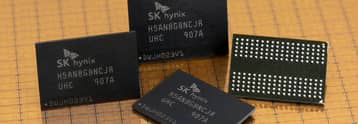
SK Hynix stock rebounds, but a new HBM4 risk is getting harder to ignore

Shein’s $1.7B IPO was heavily subscribed, so why did the stock crash 10%?
No results found
Loading articles...
Failed to load articles. Please try again.