
Australian dollar steady as RBA leaves rates unchanged at historic lows
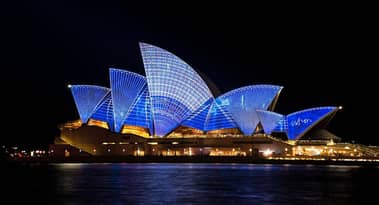

- The Reserve Bank of Australia left interest rates unchanged at a historic low of 0.25%.
- Philip Lowe, the governor, pledged to do whatever it takes to safeguard Australia's jobs.
- The central bank has provided more than $90 billion in stimulus to encourage lending to businesses
The Australian dollar rose against the US dollar after the central bank delivered its interest rates decision. The bank left interest rates unchanged at 0.25% and committed to providing more support to the economy as needed. This decision was in line with what economists polled by Bloomberg were expecting. The bank has slashed rates two times this year.
Australian dollar rises after RBA decision

In a statement, Governor Philip Lowe said
that while major markets have been volatile, there were signs of stability. He
also committed to do whatever it takes to support jobs and incomes in the
country. In the statement, he said:
“The comprehensive policy package announced last month will also support the expected recovery. The Board will not increase the cash rate target until progress is being made towards full employment and it is confident that inflation will be sustainably within the 2–3 per cent target band.”
Australia hit hard by Coronavirus
Australia, as with all countries, has been hit
hard by the current pandemic. The country has confirmed more than 5,000 cases
and less than 50 deaths. While recent data show that the curve of the pandemic
is flattening, there
are worries that the country will struggle to come back in the near term.
Last week, data from Markit showed that activity
in the important services sector dropped to 38.5 in March. This was lower than
the estimated 39.8 and the lowest number recorded.
Previously, data from the Australia Industry
Group (AIG) showed that manufacturing
PMI rose to 53.7 in March. While this number was good, the group warned
that it was driven by high demand as Australians hoarded foodstuff and
household products. Another number from Markit showed that the PMI declined
from 50.2 in February to 49.7.
The slowdown in business activity is directly
attributed to the country’s measure to reduce the spread of the disease. For
example, the country has halted
international flights and implemented some sort
of lockdown.
It is also indirectly attributed to the
country’s close relationship with China. Australia, which is known for its many
natural resources, sells two-thirds of its goods to China. Therefore, when China
slows as it did in the first quarter, Australia is affected.
The same applies in the services sector,
which is the growing segment of the Australian economy. Most foreign buyers of
the country’s services are Chinese. For example, one in five international
students in Australia is from China. According to the Financial
Times, these students bring more than $25 billion to the Australian economy
every year.
Australia first recession in three decades
As a result of all this disruption, Australia
is expected to go through its first
recession in decades. More Australians are expected to file
for bankruptcies, and many businesses are expected to shut. The unemployment
rate is expected to soar. In the statement today, the central bank expects the
economy to shrink by more than 5%.
This has seen the Australian main index
decline by more than 22% this year while the Australian dollar has fallen by
more than 12% against the dollar. This makes it among the worst-performing currencies
in the developed world. The only worse performer has been the Norwegian krona,
which has declined by more than 20%.
Australia
dollar has lagged other key currencies

Australia government Coronavirus stimulus
As with all governments, the Australian
government has reacted in order to cushion the economy from collapsing. The government
has unveiled multiple stimulus packages worth more than $213 billion. The first
stimulus of $17.6 billion was meant to help companies manage their wage
bill and for welfare recipients.
The other stimulus worth $66
billion went to welfare recipients and job seekers while the recent $130 billion
was meant for job seekers and companies.
States have announced a stimulus package worth
more than $12.8 billion. Meanwhile, the central bank announced a large $90
billion three-year facility that will help banks lend money to customers.
Australia dollar technical outlook

On the four-hour chart, the Australian dollar
has been rising against the USD in the past few sessions since bottoming at around
0.5500. The pair is along the 50% Fibonacci Retracement level and slightly
above the 50-day and 25-day exponential moving averages. The pair is likely to
continue moving upwards and attempt to test the important resistance level of 0.6210.

Hang Seng Index: Top 3 reasons Hong Kong stocks are falling today

Kospi Index at a crossroads as Samsung, SK Hynix leverage bets reverse
Rolls-Royce stock: The bull case is strong, but these risks could trigger a drop

Here’s why the Alibaba stock is crashing in Hong Kong today

Here’s the top reasons why the Kospi Index is falling today
No results found
Loading articles...
Failed to load articles. Please try again.