
H2 2023 rate outlook: Fed policy and its inherent contradictions
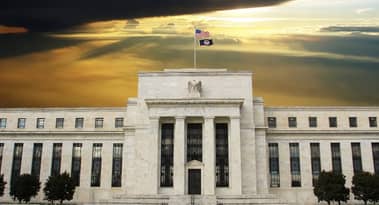

- The Federal Reserve's FOMC is meeting later this week.
- The market widely anticipates Jerome Powell to maintain the status quo this month.
- The dual mandate creates tension between the need for a hawkish and dovish stance.
With the FOMC announcement scheduled for the 14th of June, markets are largely expecting Jay Powell to maintain the status quo.
Jeffries’ Chief Market Strategist David Zervos believes that,
…the skip makes a lot of sense…(a) lot of success with disinflation…I think they (the Fed) can rest easier and if they need to, do another 25 (bps) in a future meeting…I think they can do that and I think they will maintain all the credibility…
Despite all the feel-good news, the Fed’s dilemma is the same as it has always been.
Its dual mandate demands balancing full employment and price stability.
To maintain full employment and financial stability, monetary policymakers will usually want a looser monetary policy.
On the other hand, price stability (inflation management) requires tighter policies.
Yet, according to CME’s FedWatch data as of 12th June, there is only a 26.2% chance that rates will shift higher to 5.25% – 5.50%.
However, Eric Rosengren, president of the Boston Fed from 2007 to 2021, argued,
No model is going to say increasing interest rates in June rather than September is going to make a huge difference to the path of inflation…
The truth is that the rationale for pausing in June only to (perhaps) press on during the next meeting may not be ideal.
However, this may be an indication that the Fed is highly concerned that they have overtightened, portfolios may be much weaker than earlier anticipated and that the labour market maybe under a degree of stress.
Inflation data
In an effort to curtail four-decade highs in inflation, the Federal Reserve has tightened policy rates at a near-unprecedented pace.

Inflation has indeed come down considerably since the Fed began its policy cycle, with the CPI easing at one of the fastest rates in the post-war era.
During the Fed meeting, data on the CPI, core CPI, PPI, core PPI and the latest figures of a leading business optimism index will be released.
These will have a bearing on the Fed’s decision, particularly if they are far off their industry estimates.

PCE, the preferred inflation gauge of the Federal Reserve has also been brought down meaningfully over the previous 12 months.

However, it continues to remain well above the Fed’s 2% target, and with some economic indicators beginning to show stress, it is unlikely that this can be achieved without inflicting damage on the economy.
The Fed’s own projections place this timeline towards the end of 2024, while 2023 is projected to finish with a PCE of 3.3%.
Given the elevated PCE in the first four months of 2023, this seems difficult to achieve without additional tightening or the appearance of a strong (but likely damaging) lagged effect.
This is where the contradiction in the Fed’s mandate is exposed.
More rate hikes are potentially needed to slow stubborn inflation, while continuing to tighten may cause significant financial instability, joblessness and re-ignite banking sector turmoil.
Labour market
The recently released NFP (nonfarm payrolls) and employment situation numbers were met with cheer as payrolls of 339K in May 2023 exceeded industry expectations of 190K.
This marked a record 14th month in a row during which industry expectations fell short of the published number.
Surprisingly, this has come during the sharpest period of monetary tightening in recent memory, only adding to market optimism.
But is this interpretation wholly warranted?
Here are some pointers to consider regarding the BLS’s latest employment situation report:
- NFP data is drawn from the establishment survey while employment data is taken from the household survey.
- While NFP data rose by 339K, employment data fell by 310K.
- The unemployment rate rose from its historic low of 3.4% to 3.7%.
- NFP data is susceptible to double counting, as a single person with multiple jobs will be counted as distinct jobs in the survey. It is possible that more workers are looking to supplement their incomes with additional work.
- Those having worked more than one hour during the week of the household survey will be counted as employed.
- As a result, they could be artificially inflating measures of employment and payrolls, while capping the unemployment rate.
- Other than the contrary indications that the NFP and employment data can produce, the increase in the unemployment rate does not match the unchanged labour participation rate, nor does it appear to capture the high concentration of layoffs in the tech sector.
- In addition, the numbers have been and are constantly revised by significant magnitudes casting doubt on the reliability of the numbers.
- The wage growth of 0.3% MoM fell below expectations again not matching the apparent health of the labour market.
As a result, Fed policymakers may begin to doubt the degree of confidence they have been showing in the labour market, particularly with the accumulation of 5% of rate hikes, which are yet to work their way through the economy.
Interested readers can find more information about the JOLTs report and the “BLS Wonderland” report here.
Wages

Economic wisdom suggests that to sustain a 2% level of inflation, wage growth should reduce to 3.0% – 3.5%, which means this metric still has a way to go.
If the jobs report is as sound as many claims, this will only make the Fed’s job more difficult while inflation will stay more stubborn.
Again, the Fed would need to likely rely on higher rates or the unknown impact of accumulated monetary lags.
Interested readers can read about Danielle DiMartino Booth’s view on lags here.
Banking conditions
In a March 2023 piece, entitled, ‘6 key signals of rising financial stress in the US banking system’, I discussed some of the major issues that American banks were having to face at the time.
Fortunately, the fears of widespread contagion have died down for now.
Having said that, multiple crises shook the financial system by triggering three of the four biggest bank failures in US banking history.
FRA-OIS
The FRA-OIS spread is an indicator of the health of the interbank lending market.
The smaller the spread, the more confidence banks have in each other.
This indicator paints a fairly optimistic picture with the spread falling to 28.1 as of June 9th, 2023, significantly lower than the nearly 60 it reached in mid-March.
However, the all-important Senior Loan Officer Opinion Survey published by the Federal Reserve finds that lending conditions have tightened in Q1, following the Fed’s aggressive monetary policy.
Other than being a potential cause for the weakening of loan books, the report notes,
Regarding loans to businesses, survey respondents reported, on balance, tighter standards, and weaker demand for commercial and industrial (C&I) loans to large and middle-market firms as well as small firms over the first quarter. Meanwhile, banks reported tighter standards and weaker demand for all commercial real estate (CRE) loan categories.
Lending is expected to continue to tighten during 2023 with banks citing,
…a less favorable or more uncertain economic outlook, reduced tolerance for risk, deterioration in collateral values, and concerns about banks’ funding costs and liquidity positions.

During Q1 2023, the majority of surveyed financial institutions tightened their lending practices and charged higher premia for riskier loans, which may result in capital drying up later this year.

CRE headwinds
Commercial real estate loans represent an especially vulnerable segment.
Trepp, a provider of data, insights, and technology solutions to the structured finance, commercial real estate, and banking markets, estimates that $448 bn worth of loans will mature in 2023, a subset of the total $2.56 trillion maturing between 2023-2027.
The graph below depicts the response of lenders to deteriorating interest-rate-sensitive CRE projects during the first quarter of the year.

It is to be seen how much wiggle room banks will have, to extend these loans, and how many borrowers will be in a position to refinance at these high rates.
In a recent interview, Gerald Celente, business consultant and publisher of the TRENDS Report, commented,
Going back to commercial buildings, now people’s home month after month after month they’re saying themselves…I’m getting up at five o’clock in the morning to drive an hour and a half of commute an hour and a half each way. I’m not doing that anymore. I could work from home. I own let’s say…office space. I got 12 floors…stay home two days a week. I don’t need 12 floors. I only need three. I’ll cut back my expenses. Now all the businesses that depended on commuters … (will) start seeing defaults on debts. Small businesses, medium-sized businesses, and the big real estate sector…Can’t pay the mortgage. These are floating loans so now interest rates have gone way up and now I got to pay more on my loan and I got less tenants.
In any case, with high prevailing rates, this sector is likely to place considerable recessionary pressure on the economy.
In a WSJ article, Nick Timiraos wrote,
Fed regulators are keeping close tabs on 20 to 30 institutions they see as more vulnerable following this spring’s banking turmoil. Analysts worry more shoes could drop as the economy slows and defaults rise.
He quotes former Dallas Fed President Robert Kaplan,
…you’re still going to have (bank and institutional) failures…You’re still going to need to merge a number of them.
Weaker consumers and lower growth
Month-on-month retail sales have been lagging behind forecasts.
With concerns that the financial cushion that was provided to US households during the pandemic may be nearly extinguished, we may see a weaker consumer in the months ahead.

More worrisome is the historic highs in credit card debt levels reaching $980 billion.
Repayment will become even more challenging given high-interest rate levels, which will likely further dampen consumption and growth.
The Fed projects median GDP values at 0.4% for 2023 and 1.2% in 2024.
However, a recent report by the World Bank expects growth to decelerate to 0.8% in 2024, again due to the lasting impact of highly-aggressive monetary policy.
Hard landing ambiguity
Although relatively rarely mentioned nowadays, the hard landing question is yet unanswered, and may still play out without much warning.
Attaining both the Fed’s objectives without triggering a recession is looking unlikely, with the PCE still quite a distance from the 2% level.
At the same time, the employment survey and banking sector has started to show signs of weakness.
Further hikes are likely to damage already slowing growth factors, which in turn would have a negative impact on jobs.
Might the narrative of the Fed’s decision to skip a rate hike in June 2023 be an admission of just this weakness?
Stanley Druckenmiller for one, does expect things to turn sour, and in the month of May, projected the unemployment rate to head north of 5%, corporate profits to fall by at least 20% and bankruptcies to rise.
In a similar vein, Celente added,
The banking bust has just begun. The banking bust has just begun. It’s going to hit small and medium-sized businesses trillions of dollars of debt are coming up at the end of this year and they’re not going to be able to pay it.
As mentioned earlier, one of the key factors that may play into this is the issue of monetary lags, which are yet to find their way through the economy and could potentially result in an unforeseen contraction in economic activity and tightening of financial lending.
Final thoughts
The Fed can’t risk a resurgence in inflation.
If a decision to skip June’s rate hike is made, this could reflect the Fed’s new apprehension about the labour markets, the state of financial lending or pressure from monetary lags.
Although expectations are that rates will be stable or even hiked by a further 25bps-50 bps this year, the Fed’s trajectory will only become clearer once there is a consensus on the hard landing question.
Violent and unexpected shifts in inflation and employment data this year may still force the Fed to retain the option of a rate cut.
Timiraos argued,
Fed officials don’t think a crisis is imminent…But current and former central bankers say if stresses worsen, the Fed will face a more difficult trade-off.

What the Iran war could mean for US midterm elections

Invezz Explains: why you should closely watch payrolls, claims, ADP and JOLTS data
Fed Chair Kevin Warsh warns inflation may require more action

Column: The Fed’s inflation problem is getting harder to ignore

Scotiabank stock has soared to a record high after earnings: more upside?
No results found
Loading articles...
Failed to load articles. Please try again.