
Indian agricultural restrictions and export curbs 'need of the hour', says IIPA’s Vishandass

- As per Professor Vishandass, these restrictions were needed to ensure that domestic demand was met.
- In the long run, improved demand forecasting and detailed statistical information is crucial.
- Domestic Resource Cost calculations are a must for agricultural policy decisions.
India’s November retail inflation increased to a three-month high, and at 5.6% YoY is shifting closer to the Reserve Bank of India’s 4% (+/-)2% inflation targeting ceiling.
Powered by rising food costs, this was the fiftieth consecutive month that the consumer price index (CPI) was above 4% YoY, while also marking the first increase since July 2023.
The Consumer Food Price Index (CFPI) jumped to 8.7% YoY on the back of challenging weather patterns, uneven rainfall, and higher festive demand.
Spices, pulses, and vegetables led the way, rising 21.6%, 20.2%, and 17.7%, on an annualized basis.
Sugar and confectionery items were also up 6.5% YoY, while sugar buffer stocks declined and production is estimated to fall during the 2023-24 season.
As a result, policymakers determined that supply-side measures were necessary.
These included export restrictions on essential items such as onions, rice, and wheat, and a decision to reduce the quantum of sugar delivered to ethanol distilleries.
To get a better sense of agricultural policy in India and the implications of these steps, we spoke with renowned agriculture expert, Professor Ashok Vishandass.
Dr. Ashok Vishandass, Professor (Applied Economics) at the Indian Institute of Public Administration (IIPA) has interests in Sustainable Agriculture, Risk Management, and International Trade and Commerce.
As ex-Chairman of The Commission for Agricultural Costs & Prices (CACP) in the Ministry of Agriculture and Farmers Welfare at the level of the Secretary to the Govt. of India, he possesses a rich and diverse experience in the formulation of Agriculture Price and Non-Price Policies, including fixing the Minimum Support Price of various agriculture commodities.
The following are edited excerpts from our discussion.
Q) In light of the new agricultural restrictions and export curbs, do you believe that the Government of India (GoI) has taken the appropriate steps to manage rising food inflation?
A) The restrictions in the current situation are necessary because we have to prioritize meeting the domestic demand first. This was imperative.
Secondly, inflation has to be kept within the RBI’s band of 4% +/-2%. These are the compulsions the government is faced with and therefore, these restrictions were the need for the hour.
Q) In your opinion, are any other measures needed?
A) The restrictions are appropriate but it would have been better to put in place certain demand forecasts.
We require a strong database on demand, production, and consumption. There has to be a proper statistical system which is in place.
That could have helped to avoid abrupt restrictions on exports and better calibrate any policy decisions. But this is a long-term process.
Secondly, the measures do have some repercussions on producers and farming operations.
For instance, the farmers may have committed certain deliveries to their clients who may be based overseas.
Having said that, these steps were needed as there was an emergency but in the long-term, you have to be preventive rather than curative.
Q) Given that some overseas contracts may be impacted, could these restrictions hurt India’s global brand-building efforts?
A) It is a concern but obviously the government will choose the lesser evil, and they have done the right thing.
All said and done, the government must feed the domestic consumers, which they did in the situation we are currently undergoing.
Q) Where do you see food inflation and food security in the next six to twelve months?
A) My take is that the government is taking adequate measures which will keep food inflation restricted.
Secondly, the size of the crop is good, and I do not think availability is going to be an issue. The only issue just now is affordability since the cost of production is rising.
There are three elements to consider for food security – affordability, availability, and accessibility.
Out of these three As, availability and accessibility are not an issue for our country.
But of course, affordability is an issue which can be made good via government measures or by certain subsidies to aid those sections of the population which are facing this issue.
But to manage any future shortfalls, it is better to have a long-term forecast for production and then calibrate the production according to the demand.
Q) Given that India is one of the largest ethanol producers in the world, what could restrictions on sugar mean for our exports?
A) Yes, ethanol exports are important but our long-term objective (with ethanol) is to reduce dependence on the import of fossil fuels.*
The challenge with ethanol in India is that it impinges on our food production.
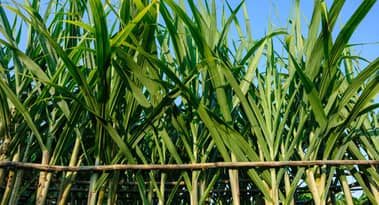
An issue with sugarcane, in particular, is that it is a water-guzzling crop.**
We are a water-stressed country and that is an issue which we cannot ignore. This is one drawback of using sugarcane for ethanol.
One has to take a balanced view on converting these crops to ethanol since we must take into account water usage and food security.
Sugarcane is perhaps not the best route for reducing dependence on fuel imports.
Maize and corn are other possible sources but again these are food crops.
In the case of maize, soil quality and weather conditions are important factors that need to be considered.
For instance, Punjab offers very favourable conditions and maize was traditionally grown there. However, much of this has now been displaced by paddy cultivation.
Another benefit of maize is that it is not a water-guzzling crop, so that could be one option for use in ethanol.
The most important thing is to recast what our demand is, and what it is likely to be.
So, we have to focus on producing according to demand, instead of producing more than what is required, and then keep on trying to store and export it.
For example, paddy is a case in point. We don’t need so much paddy, but we are exporting roughly 10 million tonnes. It is a water-guzzling crop, which means we are exporting virtual water.
So, the diversification to maize is also recommended since it consumes less water, but since there will be a trade-off from food crops to non-food items, it is a very tricky issue.
As I had mentioned earlier, I wouldn’t support converting cane juice into ethanol. It is not sustainable and consumes lots of water.
Q) Is it viable to utilize rice as a feed for ethanol conversion?
A) Well, perhaps it can be in the short-term with excess stocks, but I do not subscribe to the view of converting this. It is important to consider the inputs of rice.
There are two major aspects to consider. One is the private financial cost to the farmers to engage in these operations which offers a relatively narrow picture of the situation.
The other is the more technical Domestic Resource Cost (DRC). DRC is a much wider concept and encompasses the cost to the nation in terms of resources.
In the case of rice production, DRC is too heavy. You can’t produce rice for the sake of converting this into fuel. This is not sustainable since our water tables are going down.
Due to excessive subsidies, many farmers are already receiving free power and free water. The costs may not be visible, but to me, this is a very costly DRC, and we must keep the bigger picture in mind when changing any policies.
Q) Is there any other policy measure you would like to see from the government to support agriculture in the country?
A) There has to be a greater focus on the farmers. Important steps would include rationalizing the fertilizer policy and offering certain subsidies on a per-hectare basis.
The situation on the ground is particularly unfavourable for tenant farmers since they do not have rights to the land and lack benefits. This is an important area which needs to be addressed.
*As per the Petroleum Planning & Analysis Cell of the GoI, import dependence is 87.8%.
** As per the Indian Institute of Sugarcane Research, Lucknow, sugarcane crop requires anywhere from 1400-2300 mm in the subtropics and 2000-3500 mm in tropical regions.
WTI crude oil price forecast as Middle East risks remain elevated: can it hit $120?
Here’s why Brent crude oil price is falling today and what's next

Oil has surged 13% this week: why the rally may struggle above $110

Why gold is still falling even as Middle East tensions keep getting worse

WTI tops $100 as US-Iran conflict fuels supply fears
No results found
Loading articles...
Failed to load articles. Please try again.