
January's Federal Reserve interest rates meeting begins soon, but what do markets expect to happen?
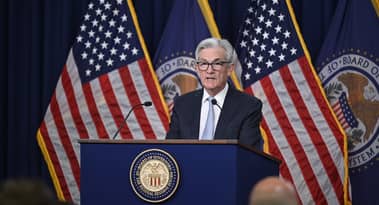

- The United States' Federal Reserve holds its monetary policy meeting tomorrow and Wednesday.
- Looking at recent past statements, we've made a list of what markets can expect from chairman Jerome Powell.
- We've also looked at what's not likely to happen, based on Powell and other officials' recent statements.
On January 30th and 31st, the Federal Reserve of the United States will meet for their first 2024 meeting on interest rates, with the decision publicly announced on the 31st at a press conference.
This much we know. But what we don’t yet know is what the Fed will decide, what the Federal funds rate will be and whether or not an interest rate cut is on the cards for this week.
What is unlikely: rate cuts as early as February
In its December 2023 FOMC meeting and subsequent press conference, the Federal Reserve committee unanimously voted to hold rates steady, and also left the door open for as many as five interest rate cuts in 2024 – a substantial amount, considering there are only eight Federal Reserve meetings per year. As chairman Jerome Powell said in his press conference:
Since the announcement, it’s clear that plenty of Americans have been anticipating a reduction in interest rates soon. According to Google Trends, the search term ‘fed rate cuts 2024’ is up almost 4,500 percent in the past day alone in the United States. But will they get the much-anticipated rate cut this week?
What's very likely: holding interest rates for now
What’s far more plausible, according to market analysts who across the board, is that the Fed will follow in the footsteps of the European Central Bank, Bank of Canada and Bank of Japan, who all held their interest rates steady this month.
After all, inflation is not yet beaten - at least, not completely. While inflation is coming down in a broad sense, CPI actually rose 0.3 percent in December 2023, against many predictions that it would either be stable or drop. This means that the January 2024 figures will be very closely watched by the monetary policy committee for any signs of a rebound from inflation after holding rates steady at the end of last year.
Instead, what many will be focusing on come Wednesday is not the Fed's actual decision on rates per se - it's more about the way in which Powell will announce the decision and the wording used.
What is also likely: cautionary, somewhat hawkish statements
Because of the above, and as a response to the sheer amount of optimism in the market sentiment and the press lately, Powell may well give a cautionary word on the fact that rate cuts are by no means imminent – or even guaranteed – in the first half of 2024. As he said in December:
In the European Central Banks interest rates announcement last week, ECB president Christine Lagarde got quite a workout dodging and diving the questions from journalists as to whether or not they would start to cut interest rates in June or July this year. If that is anything to go by, Powell's Wednesday is likely to be a similar exercise in allusions and evasion.
What is least likely of all: rate hikes
However, this does not mean that rate hikes are likely incoming for February and March 2024.
America can breathe a sigh of relief in this, at least: something very drastic would have had to go wrong with January's figures for another interest rate hike to come to pass. Powell emphasised in December that "participants [of the FOMC] do not view it as likely to be appropriate to raise interest rates further, neither do they want to take the possibility off the table.”
After all, the U.S. economy has been showing fledgling signs of growth over the past three months, which could be crushed by an overly tight monetary policy. While monetary policy throughout most of 2023 and 2023 attempted to tramp inflation down as forcefully as possible, it's been a far more delicate dance in recent months, trying to balance overly restrictive policy with cutting rates too soon and inflation rising once again.
There isn't too much January economic data yet to be able to guess just how difficult that balancing act will be for now. After all, the United States' latest Nonfarm Payrolls figures, ISM manufacturing, consumer confidence unemployment rate and jobless claims all come out later this week.
For that reason, the market will be even more attentive to what the Federal Reserve has to say on Wednesday, as one of the first signs in 2024 of how strongly America has started off the year.
What the Iran war could mean for US midterm elections

Invezz Explains: why you should closely watch payrolls, claims, ADP and JOLTS data

Column: The Fed’s inflation problem is getting harder to ignore

US PCE in July higher than expected at 3.7%, but core PCE matches forecast

US inflation test is hours away: 3 stocks most exposed to the PCE surprise
No results found
Loading articles...
Failed to load articles. Please try again.