
South Africa becomes first African nation to legalize marijuana
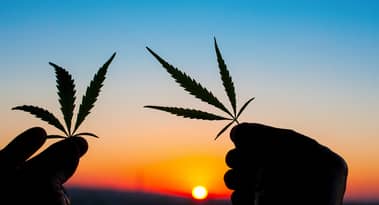

- South Africa becomes the first African nation to legalize marijuana use.
- The Cannabis for Private Purposes Act allows adults to grow and consume cannabis, except in presence of kids.
- Despite legalization, selling cannabis remains illegal without a medical prescription.
On the eve of the May 27 general elections, President Cyril Ramaphosa signed the Cannabis for Private Purposes Act, making South Africa the first African nation to legalize marijuana use.
This landmark legislation, which barely drew attention amid the election fervor, marks a significant shift in the country's drug policy.
The bill removes cannabis from South Africa’s list of outlawed narcotics, allowing adults to grow and consume the plant, except in the presence of children.
Major shift in drug policy: records to be wiped clean
The Cannabis for Private Purposes Act stipulates that individuals who previously broke the law by engaging in such activities should have their records automatically expunged.
However, the implementation details remain unclear, including when and how the records of the 3,000 people imprisoned for cannabis-related offenses as of 2022 will be cleared.
Myrtle Clarke, co-founder of the NGO Fields of Green for ALL, praised the legislative change, stating,
Clarke emphasized the need to address trade regulations next, as selling cannabis remains illegal unless prescribed for medicinal purposes.
Legal cannabis trade remains unresolved
Unlike countries such as Malta, Canada, and Uruguay, South Africa has not established a legal framework for the casual purchase of cannabis. While adults can grow their own plants, selling cannabis without a medical prescription is still prohibited.
Clarke explained that while individuals caught with cannabis are no longer considered drug dealers, the market remains largely unregulated, leading to a thriving grey market.
This legislative change follows a 2018 court ruling that private consumption of cannabis was constitutional. Since then, the government has permitted the sale of cannabis under Section 21 of the Medicines Act, allowing for "unregistered medicines" if prescribed by a doctor.
Economic implications and ongoing challenges
The end of cannabis prohibition in South Africa could have significant economic implications. According to Myrtle Clarke,
The proliferation of cannabis clubs and dispensaries has created a de facto market, with many establishments operating under the principle of private consumption.
However, uncertainties in the law have led to periodic enforcement actions, such as the 2020 raid on The Haze Club in Johannesburg.
South Africa’s history with cannabis, locally known as dagga, dates back centuries. The plant was used by indigenous Khoisan people and later by Zulu warriors and Sotho women for various purposes.
Despite its deep cultural roots, cannabis was outlawed in 1922, with harsh penalties imposed during apartheid.
Legalization litigation and future outlook
The modern push for legalization began in 2017 with a case brought by Rastafarian lawyer Ras Gareth Prince. The Western Cape High Court ruled that prohibiting cannabis violated his right to privacy, a decision upheld by the Constitutional Court in 2018.
This ruling mandated the government to revise its laws, a process that culminated in the recent legislative change.
Clarke and other activists are now focused on regulating the trade, challenging the lingering perception of cannabis as a dangerous drug.
“We always laugh and say the government thinks we smoke the leaves [which has no effect], but it’s true,” Clarke remarked, highlighting the need for informed policymaking.
Regional impact and potential domino effect
South Africa's cautious approach may help it avoid a backlash similar to Thailand’s, where rapid cannabis reforms led to a moral panic and potential legislative reversals.
As the first African nation to legalize recreational cannabis use, South Africa’s decision could influence neighboring countries. Eswatini, a landlocked kingdom surrounded by South Africa and Mozambique, is closely monitoring developments. Local cannabis growers fear that South Africa’s legalization may threaten their livelihoods.
Trevor Shongwe of the Eswatini Hemp and Cannabis Association (EHCA) expressed concerns about the economic impact on smallholder farmers who rely on cannabis cultivation.
“We believe that the legalization of cannabis in South Africa has created unequal economic participation in one of Africa’s biggest markets,” Shongwe said.
He advocates for Eswatini to legitimize its domestic market and protect its indigenous cannabis strains, such as Swazi Gold.

US jobs rebound in August with 162,000 payrolls increase: is a Fed rate hike coming?

US jobless claims rise slightly as labor market remains in slow hire, slow fire phase

US layoffs jump 58% in August over July, but remain lowest for the month since 2022

US private payrolls rise just 38,000 in August as hiring momentum weakens: ADP

US job openings rise modestly in July but employers pull back on hiring
No results found
Loading articles...
Failed to load articles. Please try again.