
Is Taiwan's 'silicon shield' weakening as TSMC expands globally?
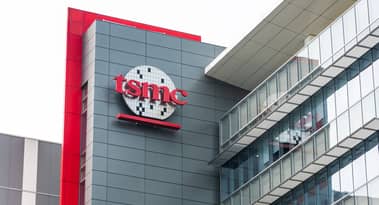

- Taiwan remains central to advanced chip manufacturing, but diversification might weaken the Silicon Shield.
- TSMC's overseas factories will not produce the most advanced semiconductors.
- Diversification reduces Taiwan's exclusive control but also enhances global supply chain resilience.
The semiconductor industry, central to modern technology, has long been Taiwan's strategic defense, often dubbed the "silicon shield."
Taiwan's dominance in chip manufacturing, especially through the Taiwan Semiconductor Manufacturing Company (TSMC), has provided it with a unique form of protection against potential Chinese aggression.
However, TSMC's recent moves to build factories in the US, Japan, and Germany are raising critical questions: Could this global expansion dilute Taiwan's "silicon shield," or is it a necessary adaptation to growing geopolitical pressures?
What is Taiwan's silicon shield?
Taiwan's "silicon shield" is a concept that suggests Taiwan's dominance in semiconductor manufacturing, particularly through companies like TSMC provides the island with a form of strategic protection against potential military aggression from China.
The idea is that because Taiwan produces a significant portion of the world's most advanced semiconductors, any disruption to its semiconductor industry would have severe consequences for global technology supply chains.
The core argument is not new but was crystallized in a September 2021 article by Taiwanese President Tsai Ing-wen in Foreign Affairs, in which she wrote:
Taiwan produces over 90% of the world's most advanced chips, which are crucial for a wide range of technologies, including smartphones, computers, military equipment, and more.
Major companies, like Apple and Nvidia, rely on TSMC for their cutting-edge products.
The loss of access to Taiwan's semiconductor production could cripple industries globally, creating strong incentives for other countries to protect Taiwan from conflict.
This economic interdependence, in theory, acts as a deterrent to conflict, as major powers, including China, would be hesitant to endanger the global economy by attacking Taiwan.
Apart from the intervention that Western powers could provide in the event of a conflict, there is also an argument that China itself will not want to lose access to Taiwanese microchips for which it has no substitute.
US bolsters its semiconductor production with TSMC's help
The United States has been at the forefront of efforts to localize semiconductor production, driven by concerns over reliance on Asia for critical technologies.
TSMC's decision to invest heavily in the US is part of a broader strategy to diversify supply chains.
The company has announced plans to build multiple factories in Arizona, with the first plant expected to begin operations in 2024.
TSMC's total investment in the US is projected to reach $65 billion, supported by $6.6 billion in government subsidies and $5 billion in potential loans.
This move is seen as part of a larger initiative under the US CHIPS and Science Act, which allocates over $50 billion in grants for domestic semiconductor manufacturing and research.
The goal is to reduce dependence on foreign sources and strengthen national security.
By 2030, the US aims to produce 20% of the world's most advanced chips, a significant increase from its current position.
Japan and Germany follow suit
Japan and Germany have also recognized the importance of securing their semiconductor supply chains.
Japan, home to many major electronics and automotive companies, has partnered with TSMC to establish a factory in Kumamoto.
The Japanese government is providing substantial financial support to this venture, which is expected to produce chips for various industries, including automotive and consumer electronics.
In Europe, Germany is leading the charge with the construction of a new semiconductor factory in Dresden.
This facility, part of the European Semiconductor Manufacturing Company (ESMC), is a joint venture between TSMC and European firms like Bosch and Infineon.
Source: Statista
Earlier this week, TSMC broke ground on its factory in Dresden, Germany.
Production is expected to start at the factory in 2027, with a focus on chips for the automotive industry. The first TSMC plant in Europe, it is expected to create 2,000 jobs.
The significance of the factory is reflected in the fact that both the German Chancellor Olaf Scholz and European Commission President Ursula von der Leyen attended the ground-breaking ceremony held to mark the start of construction at the site.
The European Commission has approved €5 billion ($5.5 billion) in financial support for this project, emphasizing its importance in strengthening Europe's digital sovereignty.
What are the concerns over Taiwan's silicon shield?
While TSMC's global expansion is seen as a necessary response to geopolitical pressures, it also raises concerns about the potential weakening of Taiwan's "silicon shield."
The decision to build factories overseas, particularly in the US, Japan, and Germany, has sparked fears that Taiwan's strategic importance could be diminished.
Critics argue that by diversifying its production, TSMC may inadvertently weaken Taiwan's geopolitical leverage.
If other countries can produce their semiconductors, Taiwan's role as the world's semiconductor hub could be called into question.
Chris Miller, author of “Chip War: the Fight for the World’s Most Critical Technology” said in a CNN report:
“It also suggests that TSMC’s customers are asking for more geographic diversification, which is something that wasn’t previously a key concern of major customers.”
Wen-Ti Sung, a political scientist who teaches in the Australia National University’s Taiwan Studies Program, said in the Australian Financial Review that the West’s crusade to lessen Taiwan’s “indispensability” is a risk.
Sung added,
Some experts have also doubted whether the shield can, if at all, act as a deterrent against Chinese aggression.
Matthew Fulco, a geopolitical analyst wrote in The Japan Times,
Fulco added that the collateral damage to the Chinese economy caused by losing access to Taiwan’s semiconductors is a price the CCP would be willing to pay.
"With its massive industrial base, China might weather such a storm better than other countries that have spent the past few decades outsourcing manufacturing to reduce labor costs and boost profits," he said.
Taiwan remains crucial to advanced chip manufacturing
Despite these concerns, it is important to recognize that TSMC's overseas factories will not produce the most advanced semiconductors.
The new facilities in the US, Japan, and Germany are focused on producing chips for specific industries, such as automotive and consumer electronics.
These factories will primarily manufacture chips in the 28-nanometer range and below, which are crucial for many applications but not the cutting-edge technology that TSMC produces in Taiwan.
TSMC's most advanced semiconductors, including its 2-nanometer chips, will continue to be manufactured in Taiwan.
Source: McKinsey and Company
The company is investing heavily in expanding its operations on the island, with plans to build new fabs in Kaohsiung, Hsinchu, and Taichung.
TSMC's chairman, Mark Liu, has emphasized that the company's most cutting-edge operations will remain in Taiwan, where it has established technologies, facilities, and a skilled workforce.
Chen of CL Securities said in a CNN report that national security concerns among governments globally are driving TSMC’s expansion but the company will continue to manufacture its most advanced technology at home.
“This would make economic sense given the lower salaries and higher quality of Taiwanese engineers,” he said, adding that the company needs the approval of the Taiwan Ministry of Economic Affairs to move its most advanced technologies abroad, which it was unlikely to give.
What's next for Taiwan's silicon shield?
TSMC's global expansion can be seen as a balancing act between diversification and maintaining Taiwan's strategic importance.
By building factories overseas, TSMC is addressing the concerns of its major customers and governments who want to reduce their dependence on a single source.
However, the company is also ensuring that its most advanced technologies remain in Taiwan, preserving its competitive edge and Taiwan's role in the global semiconductor industry.
The question of whether Taiwan's "silicon shield" will be weakened by these developments is complex.
While the diversification of semiconductor production may reduce Taiwan's exclusive control over the industry, it also enhances global supply chain resilience.
Ultimately, TSMC's global expansion is a reflection of the changing dynamics of the semiconductor industry.
As countries like the US, Japan, and Germany seek to secure their semiconductor supply chains, Taiwan's role may shift, but it will remain a critical player in the technology that powers the modern world.

Klarna stock has crawled back ahead of earnings: buy, sell, or hold?

Michael Burry shorts Nebius stock as a risky doji emerges after strong earnings

Adobe stock is taking off: Could a rumored Workday buyout push it higher?

Figma stock is rising: a golden opportunity to buy at a bargain price?

Elon Musk-inspired pay packages push S&P 500 CEO compensation to record high
No results found
Loading articles...
Failed to load articles. Please try again.