
Ratan Tata: the rare businessman who everyone loved
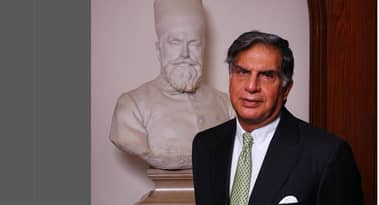

- Ratan Tata led Tata Group through unprecedented global growth.
- He balanced corporate success with a commitment to philanthropy.
- Tata’s humility and leadership leave an indelible mark on Indian industry.
The year was 2013. I was just starting out in journalism, a rookie sent to cover an event at the Taj Palace Hotel in Delhi.
It was my first-ever assignment, and my nerves were running high. I was mentally rehearsing who to meet and how to navigate conversations.
On top of that, I was entirely lost, struggling to find my way through the massive hotel.
In a rush, I headed toward the elevator, and suddenly, Ratan Tata himself appeared, walking toward the same lift. My day instantly became more nerve-wracking.
I was completely star-struck. Should I say hello? Ask for an autograph? Maybe even a selfie?
As the elevator doors opened—what felt like a lifetime later—Tata stepped inside with his companions.
Naturally, I assumed I should stay back. After all, who was I to share an elevator with him?
But just as the doors were about to close, he looked at me and, with characteristic politeness, asked, "Aren't you going somewhere?"
For a moment, I couldn’t believe it. Ratan Tata had spoken to me!
I stepped into the elevator, and he inquired, "What brings you to the Taj?"
Nervously, I explained that I was attending an event and didn’t know anyone there.
His response was simple but reassuring:
It was a small moment, but for me, it encapsulated everything that made Ratan Tata such a revered figure: his humility, his kindness, and his ability to make even the most ordinary of people feel seen and valued.
Ratan Tata: A legacy of humility, integrity, and visionary leadership
Ratan Tata, who passed away on Wednesday, leaves behind a legacy that few can match.
As a titan of Indian industry, Tata was instrumental in transforming the Tata Group from a domestic conglomerate into a global powerhouse, all while maintaining the highest standards of ethics, philanthropy, and compassion.
For millions, he wasn’t just an industrialist but a role model and a beloved figure whose values resonated with people from all walks of life.
Born into wealth and privilege, Ratan Tata could have easily taken a more entitled path. Instead, he chose to lead with humility, dedication, and a commitment to social good.
He left behind a business empire worth $403 billion, spanning 100 countries, but his greatest legacy may be the way he inspired generations of leaders to prioritize integrity over profit and compassion over self-interest.
Early life and the making of a leader
Born in 1937 to Soonoo and Naval Tata, Ratan Tata grew up under the care of his grandmother, Lady Ratan Tata, after his parents separated when he was young.
Despite his family's considerable wealth, Tata was never one to flaunt his privilege.
In fact, he often spoke of how embarrassed he and his brother Jimmy would be when they were driven to school in the family’s Rolls-Royce. Instead, they would walk home, letting the car follow them at a distance.
After completing his education in architecture at Cornell University, Tata joined the family business, not in a cushy boardroom but on the shop floor of Tata Steel in Jamshedpur.
It was here, working alongside factory workers, that he learned the importance of humility and hard work—values that would define his leadership style in the years to come.
In 1991, Ratan Tata succeeded J.R.D. Tata as Chairman of Tata Sons, the holding company of the Tata Group. His leadership came at a crucial time, as India was on the brink of economic liberalization.
Tata not only modernized the group but also spearheaded its global expansion, turning Tata into a household name worldwide.
A visionary leader with global ambitions
Under Ratan Tata’s leadership, the Tata Group underwent a period of unprecedented growth and globalization.
Among his most notable achievements was the acquisition of Tetley Tea in 2000, making Tata the second-largest tea company in the world.
This was followed by high-profile acquisitions such as Corus (a British steel company) and Jaguar Land Rover (JLR). The acquisition of JLR, in particular, was seen as a masterstroke, with Land Rover continuing to be a global success.
However, not all of Tata’s ventures were met with universal success.
The acquisition of Corus, for instance, faced challenges as the global steel industry became increasingly competitive.
But even in the face of such setbacks, Tata’s vision for a globally integrated conglomerate never wavered.
The Tata Indica and Nano: Symbolic yet challenging innovations
One of Ratan Tata’s most significant contributions to India’s automotive sector was the launch of the Tata Indica in the late 1990s.
At the time, foreign carmakers dominated the Indian market, and the idea of an indigenous Indian car seemed like a pipe dream.
Yet, against the odds, Tata Motors developed and launched the Indica, which became a source of national pride. While it faced early hurdles, the Indica eventually proved that Indian companies could compete on the global stage.
The Tata Nano, launched in 2008, was another audacious project. Touted as the world’s cheapest car, the Nano was meant to provide affordable transportation for millions of Indians.
While it generated significant international attention, the car struggled to resonate with consumers who did not want to be associated with the "cheapest" option.
Though the Nano’s commercial performance was underwhelming, it remains a testament to Tata’s innovative spirit and his willingness to take risks for the greater good.
Handling crises with integrity and resilience
Ratan Tata’s leadership was not only defined by his successes but also by the way he navigated crises. One of the most notable instances was the Tata Finance scandal in 2001.
When it became clear that the company was embroiled in financial mismanagement, Tata made a bold decision: he would ensure that no depositor, big or small, lost their savings.
He also insisted that those responsible for the scandal be held accountable, demonstrating his unwavering commitment to transparency and integrity.
The 2008 terrorist attacks on the Taj Mahal Palace Hotel in Mumbai, owned by the Tata Group, presented another significant challenge. Ratan Tata stood outside the hotel for days, sharing in the anguish of those affected.
Under his leadership, the Taj Hotel reopened just a month after the attacks—a powerful symbol of resilience and determination.
Tata famously said at the reopening ceremony:
Philanthropy and social impact: A life of giving back
Beyond his business achievements, Ratan Tata was deeply committed to philanthropy and social causes.
As Chairman of the Tata Trusts, he oversaw initiatives aimed at improving healthcare, education, and rural development across India.
His philanthropic efforts in cancer care were particularly significant, with the Tata Trusts playing a key role in the establishment of cancer hospitals and care centers throughout the country.
Tata’s love for animals was well-known.
He once skipped a lifetime achievement award ceremony at Buckingham Palace because one of his dogs was ill.
In recent years, he helped establish a state-of-the-art small animals hospital in Mumbai, providing emergency care for pets.
A humble and compassionate leader
What set Ratan Tata apart from many other business leaders was his humility and compassion. Despite his vast wealth and influence, he lived a simple life and was known for his down-to-earth demeanour.
Colleagues and employees alike remarked on his grace and genuine concern for others. He led not by command but by example, fostering a culture of trust and respect within the Tata Group.
His humility extended to his personal life as well. While he was the driving force behind one of the largest business conglomerates in the world, Tata always stayed true to his values, never losing sight of the greater good.
His leadership was defined by a deep sense of responsibility—not just to his shareholders, but to his employees, his country, and society as a whole.
A legacy that will endure for generations
Ratan Tata’s passing marks the end of an era, but his legacy will continue to inspire future generations.
He transformed the Tata Group into a global giant while remaining steadfast in his commitment to ethical leadership and social responsibility.
Under his guidance, the Tata Group became a symbol of Indian enterprise, admired both at home and abroad.
While Tata may no longer be with us, his influence on Indian industry and society will endure.
His leadership, marked by compassion, integrity, and a focus on innovation, serves as a shining example for business leaders worldwide.
Rest in peace, Sir. Your legacy of kindness, humility, and vision will continue to shape the world for years to come.

LPG crisis: can electric cooking shield India’s economy from supply shocks?

AI-driven job cuts accelerate globally as UK becomes early warning

As India cuts the cord, can cable television survive streaming wars in 2026?

Edinburgh Fringe: ‘Where everyone makes money apart from the performers’

Inside India’s booming pet care industry: how pet parents are driving a billion dollar market
No results found
Loading articles...
Failed to load articles. Please try again.