
How 2024 came to be a watershed year for autonomous vehicles in the US

- After a slowdown in 2022 and 2023, the US ride-hailing market experienced a fresh boost in 2024.
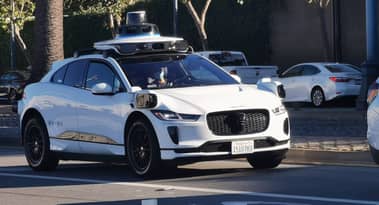
- Waymo led the AV charge in 2024 with expansion of robotaxi services and cutting-edge partnerships.
- While investment and expansion in 2024 were encouraging in the US market, challenges remain.
2024 marked a watershed year for the US autonomous vehicle industry with the ride-hailing market also experiencing a fresh boost after a slowdown in 2022 and 2023.
According to Straits Research, the global autonomous vehicle market size was pegged at $23.36 billion in 2024, and is expected to grow at a CAGR of 12.1% during 2025 and 2033 to reach $65.30 by 2033.
Europe, with strong government support and increasing demand for AVs led the pack among countries worldwide, with Germany and the UK particularly standing out.
Europe was followed by North America, where, apart from favourable government policies, the presence of industry leaders is expected to provide an impetus to demand in the coming years.
According to Autonomous Vehicle Pilots Across America, over 50% of US cities are preparing to develop their roads for self-driving vehicles.
Invezz takes a look at all the major developments that the industry leaders underwent in the last year, and what lies ahead for them in 2025.
Waymo emerges as the frontrunner in robotaxi services
Alphabet-owned Waymo emerged as the frontrunner in the autonomous driving industry as the company announced an investment of $5 billion into the self-driving startup.
Waymo unveiled its sixth-generation Waymo Driver system and with 800 self-driving vehicles in operation currently in California and Phoenix, Waymo became the only AV company to be collecting fares in the US.
In 2025, the company will expand its robotaxi services to Austin, Atlanta, and Miami, with rides available via the Uber app.
The company also announced its first international foray in Tokyo, with a start made by collaborating with Japan-based taxi operator Nihon Kotsu.
It will commence test rides in early 2025.
It has also partnered with Hyundai in October for the integration of Hyundai's Ioniq 5 SUV into the AV startup's fleet of vehicles.
The Waymo Ioniq 5s will also begin testing by late 2025.
According to a report by CNBC, Waymo co-CEOs Tekedra Mawakana and Dmitri Dolgov, told employees at an all-hands meeting in November that they should scale up as aggressively as possible but do so with safety at the forefront of all their efforts.
Therefore, simultaneously, to assure the public of safety in its service, the company has developed a large public affairs operation, published more detailed safety reports in 2024, and is working closely with the National Highway Traffic Safety Administration, first responders and authorities in the cities where it operates.
Will Tesla finally deliver on its AV promises in 2025?
While Waymo has made strides towards commercialisation and mainstream adoption, Tesla still lags behind.
Tesla's robotaxi promises remained unfulfilled in 2024, even though Tesla CEO Elon Musk did reveal the look and feel of the company's "dedicated robotaxi" in October.
Called Cybercab, the company plans to produce the robotaxi by 2027.
At the same event, Tesla also unveiled the 'Robovan', its autonomous bus, however, despite these innovations, Tesla has not yet obtained permits for commercial robotaxi services in key US markets.
While bullish investors say Tesla will deliver on its driverless technology promises as early as next year, looking at Tesla's missed deadlines on robotaxis, critics have their doubts.
Musk, on the other hand has attributed the delays to US regulations.
Current regulations cap the number of self-driving vehicles a manufacturer can deploy at 2,500 annually under special exemptions.
Efforts to increase that limit to 100,000 have repeatedly failed in Congress due to legislative gridlock.
On a Tesla earnings call on Oct. 23, Musk said he would use his sway with now President-elect Donald Trump to establish a “federal approval process for autonomous vehicles.”
Separately, after the US elections on November 18, Bloomberg reported that Trump's transition team had signalled plans to prioritise the development of a federal framework for fully autonomous vehicles.
Tesla’s stock reacted positively to the news, surging over 5% on trading platforms like Robinhood in what can be seen as a signal for the road ahead for Tesla with Trump in power.
However, in a post for Stanford Law School's Center for Internet and Society, AV policy expert Bryant Walker Smith has rejected the idea that regulatory hurdles have curtailed the robotaxi business.
"AVs can be — and in fact are — lawfully deployed and regulated under existing federal statutory law," he said, highlighting Waymo's example.
How Zoox’s unique approach shows promise
Amazon-backed Zoox has shown promise with its self-driving shuttles.
These vehicles, described as "toasters on wheels," lack a steering wheel or driver’s seat and feature inward-facing seats, making them ideal for urban environments.
In 2024, Zoox secured permits to carry passengers in Foster City, California, expanding to Las Vegas and San Francisco through its Zoox Explorers program.
According to CNBC, in March, the company expanded the environmental conditions its AVs can handle on public roads to include “nighttime driving, driving under light rain and damp road conditions, and at speeds up to 45 mph.
The company’s leadership, including CEO Aicha Evans, has focused on scaling operations while maintaining safety standards.
Zoox is now aiming to offer free rides to a wider group of the general public early next year, before opening up to paying customers and the general public, CNBC said.
The service will start in Las Vegas and expand to San Francisco, the company told CNBC.
It will begin with an early rider program called Zoox Explorers, allowing select users to ride in a Zoox for free and provide feedback.
A recent hire, Zheng Gao, formerly Tesla’s autopilot hardware lead, signals Zoox’s commitment to attracting top talent.
GM's withdrawal from the AV sector stunned industry
Despite growing demand for robotaxi services in the US, GM stunned industry observers by announcing its withdrawal from the sector earlier this month.
“Cruise was making great progress in the robotaxi space, but deploying a fleet involves significant operational complexities,” GM CEO Mary Barra explained during a call detailing the strategic shift.
The Detroit-based automaker will now concentrate on developing "personal autonomous vehicles" rather than pursuing robotaxi ventures.
GM has not yet disclosed how many of Cruise’s 2,300 employees will transition to its broader technology team.
Cruise founder Kyle Vogt, who sold the company to GM in 2016 and departed in late 2023, criticized the decision on X, writing, “If it wasn’t obvious before, it is now: GM doesn’t get it.”
The road ahead for autonomous vehicles
In 2024, though the AV industry overall still faced a lack of sufficient capital to support technology, investment announcements like Alphabet's added a milestone.
S&P Global Mobility's September 2024 Autonomy Forecasts describes sales of autonomous vehicles growing slowly in the US.
According to S&P Global Mobility's September 2024 Autonomy forecasts, in 2034, sales of autonomous light vehicles in the US is forecasted to reach about 230,000 autonomous mobility-as-a-service units, suggesting a market share of less than 1.5% per year a decade from now.
In mainland China, development is progressing more quickly. In that market, S&P forecasts potentially 1.5 million autonomous vehicles sold in the country in 2034, or about 5% of light-vehicle sales.
Europe is expected to advance more slowly than the US, however, with sales beginning later than either the US or mainland China and rising to only 37,000 units in 2034.
"Will autonomous vehicle technology prove to be as elusive as a strong hydrogen economy, something for which scale deployment seems perpetually 15 to 20 years in the future? Investment and expansion in 2024 are encouraging in the US market, but challenges remain," said S&P.

TLT ETF slumps as US debt nears $40 trillion, 30-year yield jumps

Has Atlassian, ServiceNow performance this quarter reduced SaaSocalypse fears

From Meta to OpenAI: AI security enters a new era as autonomous cyberattacks emerge

These three AI stocks are must-own after SpaceX earnings call

These 2 AI stocks are getting crushed: Goldman Sachs says buy the dip
No results found
Loading articles...
Failed to load articles. Please try again.