
Analysis: Will new US sanctions on Russian oil exports slash market supply?
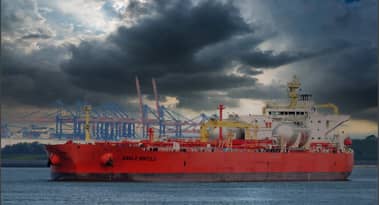

- ING Group believes that around 700,000 barrels per day of Russian oil could be lost due to new US sanctions.
- Estimates show that the Russian shadow fleet ships over 80% of the country's seaborne oil exports.
- Crude oil prices hover around multi-month highs as disruptions to supply could keep the market on its toes.
Oil prices have been trading at their highest levels in many months on Monday as concerns over disruptions in Russian supply boosted sentiments.
New sanctions on Russian crude oil are likely to tighten the spot markets in the Middle East further with demand rising from countries such as China and India.
On Friday, the US Treasury sanctioned Russian oil-producing giants Gazprom Neft and Surgutneftegaz, while also imposing sanctions on insurers Ingosstrakh and Alfastrakhovanie Group.
The US had also sanctioned 183 vessels, transporting Russian oil and are part of the country’s shadow fleet.
The US Treasury also prohibited US petroleum service companies from operating in Russia. This prohibition takes effect from 27 February 2025.
On Friday, the US announced wide-sweeping sanctions against the Russian energy sector, which saw Brent break well above $80 per barrel. The price hit $81.67 per barrel earlier on Monday, its highest in more than five months.
The price of West Texas Intermediate crude oil on the New York Mercantile Exchange also hit a more than three-month high of $77.48 per barrel.
At the time of writing, both benchmarks were around 1.3% higher than their previous close.
What impact could this have on the oil supply?
Experts believe that the new sanctions could have a significant impact on Russian oil flows.
Before the new sanctions imposed on Friday, the market had already been experiencing some sort of disruptions in Russian and Iranian oil exports.
“The Middle East physical market has been stronger as buyers look for alternative grades. In China, ahead of these recently announced sanctions, Shandong Port Group banned US-sanctioned tankers from calling at its ports,” Warren Patterson, head of commodities strategy at ING Group, said.
According to estimates, the Russian shadow fleet ships a little more than 80% of Russian seaborne crude oil exports.
And while the true size of the shadow fleet is unknown, there are estimates that it could be as many as 600 tankers, according to ING Group.
S&P Global estimates the size of the tanker fleet at 586 vessels, which suggests that around 25% of the shadow fleet has been sanctioned.
“This could put around 700k b/d of Russian crude oil at risk. Losing this volume would wipe out the surplus that we expect for the global oil market this year,” Patterson said.
Actual oil volumes lost could be smaller
Experts believe that the actual volumes of crude oil lost due to the sanctions could be smaller than anticipated.
“Some buyers may choose to ignore these sanctions, and Russia may also rely more heavily on those tankers in the shadow fleet that are not sanctioned to continue the trade,” Patterson added.
However, the transport route for the Russian shadow fleet remains a major issue.
“The transport route via the Baltic Sea is associated with higher risks for the Russian shadow fleet, as the tankers are easier to inspect here,” Carsten Fritsch, commodity analyst at Commerzbank AG, said.
But, Fritsch said that the oil could therefore also have been diverted to the ports on the Black Sea or the Pacific to be loaded there.
To maintain exports and revenues, Russia would eventually have to increase its fleet size.
Patterson said:
According to Patterson, if there are supply bottlenecks while shipping Russian crude, more Western tankers and insurance would step in.
This would mean that the oil supplied would have to trade below the $60 per barrel price cap imposed by the G7 countries in 2022.
Impact on oil prices
Oil prices have already gained sharply since last week with the new sanctions coming into play.
The uncertainty over the actual significance of these sanctions is proving to be bullish for the oil market.
“Crude oil certainly looks as if it has finally broken out above its long-term downtrend which has kept prices suppressed since September 2023, or even going back to March 2022 when it peaked after Russia invaded Ukraine,” said David Morrison, senior market analyst at Trade Nation.
If the oil volumes lost due to the new sanctions amount to 700,000 barrels per day, there could be revisions to price forecasts by major organizations.
However, ING Group believes that if Russia could manage to take appropriate actions to minimize the impact of these sanctions, fewer volumes would be impacted.
“Furthermore, it is not clear whether the incoming Trump administration in the US will keep these sanctions in place, or if they will be strictly enforced,” Patterson noted.
Morrison said:

Hormuz is reopening, so why are oil prices still racing towards $100?

Will gold surge past $4,500 if US jobs data kills September rate hike bets?

Why is gold back above $4,400 and could payrolls send it even higher?
Crude oil price forecast as Iran ramps up attacks on Kuwait
Oil pushes toward $100 as US-Iran strikes flare: what could drive it higher?
No results found
Loading articles...
Failed to load articles. Please try again.