Invezz

Dollar weakens on reports of Trump team considering gradual tariffs
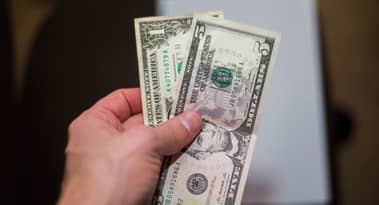
Dollar weakens on reports of Trump team considering gradual tariffs
Deepali Singh
Jan 13, 2025, 22:46 PM
  • The dollar weakened against major currencies after a report suggested Trump was considering gradual tariffs.
  • Currencies like the Australian and New Zealand dollars rose as investors reacted to this change.
  • Despite the dollar’s decline, most Wall Street banks still expect it to strengthen.

The US dollar experienced a broad decline against almost every major currency on Tuesday, following a Bloomberg News report that Donald Trump’s incoming economic team is considering a more gradual approach to imposing tariffs.

This shift in potential policy is a notable development in the foreign exchange market, triggering a strong reaction among investors.

The Bloomberg Dollar Spot Index fell as much as 0.4% in early Asian trading, after the report indicated that Trump’s advisors are discussing a slow and steady increase in tariffs, rather than an immediate, large-scale implementation.

This proposed approach could potentially alleviate some inflationary pressures from tariffs, which may, in turn, give the Federal Reserve more flexibility in reducing interest rates.

This marks the most substantial drop in the dollar gauge since January 6, when it fell after a Washington Post story, also disputed by Trump, suggested that he was planning to scale back his tariff plans.

“Dollar weakness can be sustained unless President Trump denies the reporting like he did in reaction to the report by the Washington Post,” Carol Kong, a strategist at Commonwealth Bank of Australia, highlighting the importance of Trump’s response to market confidence, told Bloomberg.

Risk-sensitive currencies rally on relief

Risk-sensitive currencies such as the Australian and New Zealand dollars jumped against the greenback, signaling a sense of relief that a major tariff shock might be averted.

The Chinese offshore yuan, a primary target for traders betting on US tariffs, also edged higher.

Market outlook: a tug-of-war between hope and reality

However, the dollar’s dominance is not expected to disappear immediately, according to Bloomberg Strategist Mary Nicola, which suggests that there are still potential headwinds for Asian currencies in the coming year.

The dollar's drop underscores the significant role tariffs play in shaping sentiment within the $7.5 trillion-a-day foreign-exchange market.

This move, though, may prove to be temporary, as most Wall Street banks expect the greenback to strengthen.

The blowout employment numbers released last week have further intensified questions about the pace of potential rate cuts.

Goldman Sachs Group Inc. has predicted that the dollar could climb 5% or more this year.

Bloomberg data further revealed that speculative traders, including hedge funds and asset managers, are now more bullish on the greenback than they have been since 2019.

“You can’t chase this thing, as a denial will be coming soon,” Win Thin, global head of currency strategy at Brown Brothers Harriman & Co. in New York, referring to the recent headlines, told Bloomberg.

Furthermore, even those who believe the dollar will lose momentum think that such a decline is likely to occur in the second half of the year, as per Mark Haefele, chief investment officer at UBS Global Wealth Management.

Emerging market currencies react positively, but caution remains

Emerging market currencies, led by the Philippine peso, the Thai baht, and the South African rand, moved higher on Tuesday, partially recovering losses from the beginning of the year when investors shunned riskier assets in anticipation of the new Trump administration.

“The tariff headlines are positive for Asia FX as it suggests a less draconian approach, but at the moment it’s still headlines," Eddie Cheung, a senior emerging markets strategist at Credit Agricole CIB in Hong Kong, told Bloomberg.

The decline in the Bloomberg Dollar Spot Index on Tuesday came after five consecutive days of gains, with the gauge currently about 0.6% higher this year, following an 8% rise in 2024.