Invezz

US and China clash over trade policies at international forum
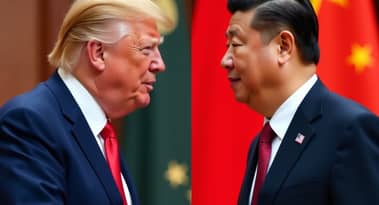
US and China clash over trade policies at international forum
Devesh Kumar
Jul 17, 2025, 11:07 AM
  • US and China clash at international forum over trade policies and tariffs.
  • Proposed US tariffs could disrupt global markets and supply chains by August 1.
  • Geopolitical tensions extend beyond trade into technology and international alliances.

In a tense showdown at a recent international forum, the United States and China once again found themselves at odds over trade policies, highlighting the deep-seated economic rivalry between the world’s two largest economies.

The clash, which unfolded amidst a backdrop of escalating tariffs and strategic economic maneuvers, has drawn global attention as leaders and policymakers grapple with the implications for international trade and geopolitical stability.

With recent updates emerging within the last few hours, this report provides a detailed analysis of the ongoing conflict, its historical context, and the potential ramifications for global markets.

Background of the US-China trade war

The US-China trade relationship has been fraught with tension for years, particularly since the trade war initiated during the Trump administration in 2018.

What began as a series of tariffs on billions of dollars’ worth of goods has evolved into a broader economic and technological rivalry.

The US has accused China of unfair trade practices, including intellectual property theft and state subsidies that distort markets, while China has criticized the US for protectionism and using tariffs as a geopolitical weapon.

According to the Council on Foreign Relations, these tensions have led to significant disruptions in global supply chains, even as complete economic decoupling remains unlikely.

Recent developments have only intensified this rivalry.

Over the past few months, reports from sources like Reuters and the South China Morning Post indicate that the US has continued to push for higher tariffs on Chinese goods, with President Trump announcing plans for a tariff barrage set to begin on August 1, 2025.

Meanwhile, China has retaliated with countermeasures, including easing some tariffs on US goods while maintaining high levies on others, as noted in updates from Yahoo Finance.

This tit-for-tat approach has set the stage for heated discussions at international forums, where both nations seek to rally support for their positions.

The clash at the international forum

At the latest international forum, details of which have been covered in breaking news by Reuters and the South China Morning Post within the last few hours—the US and China publicly aired their grievances over trade policies.

US representatives reiterated concerns about China’s export-driven economy and its impact on American industries, advocating for a coalition of over 70 nations to curb China’s ability to route goods through third-party territories.

This strategy, as reported by Reuters, aims to isolate China economically and force concessions on trade practices.

China, on the other hand, accused the US of destabilizing the multilateral trading system and violating World Trade Organization (WTO) rules.

Chinese officials, as cited in the South China Morning Post, called for a long-term trade strategy that fosters cooperation rather than conflict, emphasizing the need to strengthen ties with Asian economies like South Korea and Japan to counter US protectionism.

The forum became a battleground for these competing narratives, with neither side showing willingness to back down, further deepening the economic rift.

Implications for global trade and economies

The ongoing clash between the US and China at this forum has far-reaching implications for global trade.

As reported by Yahoo Finance, Trump’s proposed tariffs, potentially 10% on goods from 180 countries and 30% specifically on Chinese imports—could send shockwaves through international markets.

Analysts warn that such measures may exacerbate inflation, disrupt supply chains, and increase costs for consumers worldwide.

China’s response, including a potential $600 billion in trade with the US being affected, could further destabilize markets already reeling from geopolitical uncertainties.

Moreover, the South China Morning Post highlights growing concerns among Asian economies about the collateral damage from this trade war. Countries heavily reliant on exports to both the US and China fear supply chain disruptions and economic slowdowns.

The forum discussions underscored the urgent need for a resolution, yet the entrenched positions of both nations suggest that a comprehensive agreement remains elusive.

This deadlock could push smaller economies to choose sides, potentially fragmenting the global trade system.