Invezz

US sanctions on Russian oil threaten OPEC+ cohesion, drive up prices
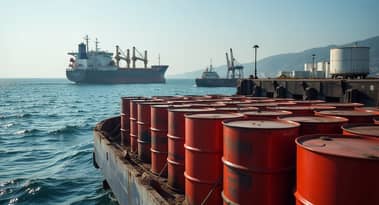
US sanctions on Russian oil threaten OPEC+ cohesion, drive up prices
Sayantan Sarkar
Oct 24, 2025, 01:31 AM
  • The US has imposed new sanctions on Russia's two largest oil companies, Lukoil and Rosneft.
  • These sanctions, coupled with attacks on Russian oil infrastructure, are causing significant supply concerns.
  • The escalating geopolitical situation could undermine the OPEC+ strategy for gradually increasing oil supply.

The latest round of US sanctions on Russia’s two largest oil companies could test the coherence of the OPEC+ strategy to gradually increase supply. 

In a move to compel Moscow to negotiate a peace agreement in Ukraine, the US has announced fresh sanctions against Russia's two largest oil companies.

On Wednesday, the US Department of the Treasury's Office of Foreign Assets Control announced new sanctions. 

These measures targeted Russia's two largest oil companies, Lukoil and Rosneft, along with several of their Russia-based subsidiaries.

The Treasury stated that these measures aim to intensify pressure on Russia's energy sector, thereby undermining the Kremlin's capacity to generate revenue for its war efforts and bolster its struggling economy.

Treasury Secretary Scott Bessent announced his department's readiness to take additional measures, "if necessary," to support US President Donald Trump's initiative to conclude the war.

Following the US President Donald Trump's statement that he did not wish for a "wasted meeting," a scheduled meeting between Trump and Russian President Vladimir Putin in Budapest was indefinitely postponed, after which this announcement was made.

Impact on prices and supply concerns

West Texas Intermediate crude oil prices climbed by 3.5% to $60.56 in early Thursday trading, building on gains from the previous session. 

These increases are attributed to supply concerns, which have been exacerbated by recent sanctions.

“The latest US sanctions on Russia’s largest oil producers represent a significant and unprecedented escalation in Washington’s pressure campaign against Moscow,” Rystad Energy’s head of geopolitical analysis, Jorge Leon said in an emailed commentary. 

Market anxieties are escalating due to the announcement, which has led to a sharp increase in oil prices, according to Leon. 

This surge highlights concerns about a potential significant decline in Russian crude exports, especially to key customers like India, he added.

The confluence of recent, targeted attacks on Russian oil infrastructure and a new wave of stringent sanctions presents a formidable challenge to Russia's crude oil production and export capabilities. 

This two-pronged assault significantly elevates the risk of major disruptions, leading to the highly probable scenario of forced production shut-ins. 

These disruptions could have far-reaching consequences, not only for Russia's economy, which heavily relies on energy exports, but also for the global energy market, potentially causing price volatility and supply shortages. 

The sustained pressure from both physical attacks and economic sanctions creates an environment of acute uncertainty for Russian energy operations, compelling a reassessment of their long-term viability and strategic resilience.

OPEC+ coherence in doubt

Leon said:

Should Russian production be curtailed, it would become economically and politically unviable for Moscow to back further output increases within the alliance.

“Such a scenario could reignite internal tensions within OPEC+, as member countries weigh the need for market stability against their own fiscal imperatives in an environment of heightened uncertainty,” Leon added.

The Organization of the Petroleum Exporting Countries and allies have increased oil production by hefty amounts since April in order to reverse the 2.2 million barrels per day of voluntary output cuts. 

Initially, the group had planned to gradually increase production till September 2026 to reverse the voluntary cuts. However, OPEC+ has already reversed the voluntary cuts and has flooded the market with more oil. 

The decision was part of Saudi Arabia’s plan to regain market share.