Invezz

Commodity wrap: silver reclaims $80/oz, oil heads for weekly gains
Commodity wrap: silver reclaims $80/oz, oil heads for weekly gains
Sayantan Sarkar
Feb 20, 2026, 10:05 AM
  • Silver hits one-week high; Gold climbs over 1% following US PCE data.
  • Oil nears six-month peak fueled by US-Iran conflict and inventory decline.
  • Inflation is high but Fed is expected to maintain interest rates at March meeting.

Silver prices were back above $80 per ounce on Friday as safe-haven demand increased due to ongoing geopolitical tensions between the US and Iran. 

Gold prices were also consolidating above the crucial mark of $5,000 per ounce as investors assessed key economic data from the US. 

Meanwhile, oil prices were slightly lower, but were poised to end the week with sharp gains. 

The metal markets have, predictably, seen reduced activity lately, a direct result of the holidays in China.

Correspondingly, the London Metal Exchange Index (LMEX) has dropped by approximately 6% since it reached its high point at the close of January.

“Rising inventories on the LME, particularly for copper, have recently weighed on prices,” Thu Lan Nguyen, head of FX and commodity research at Commerzbank AG, said in a report. 

At the time of writing, the three-month copper contract on the London Metal Exchange was at $12,809.13 per ton, largely steady from the previous close. 

Bullion rise

Silver prices rose to a more than one-week high on COMEX on Friday. 

Trading silver can be difficult due to the market's propensity for large, unpredictable intraday swings, according to Trade Nation’s senior market analyst David Morrison. 

These extreme movements can easily frighten traders into closing their positions, especially those using leverage without proper attention to position sizing.

Unlike gold, silver's daily MACD has slipped back into negative territory after being significantly overbought at the end of last month. 

However, it is now beginning to curl higher, which indicates a slight upward bias within the current consolidation phase.

Gold prices climbed over 1% following the release of the US Commerce Department's report on personal consumption expenditures (PCE). 

The report, which was delayed due to the six-week government shutdown last fall, indicated that PCE increased by 0.4% in December, month-over-month, rising from a 0.2% increase in November.

Compared with a year ago, inflation rose 2.9% in December, up from 2.8% in November.

In December, core prices—excluding the volatile food and energy sectors—increased by 0.4% month-over-month, accelerating from the 0.2% rise observed in November. 

Year-over-year, core prices rose 3% in December, a faster pace than the 2.8% increase recorded in November.

Despite falling from its 2022 peak near 7%, inflation is still high, according to the figures.

According to the CME's FedWatch Tool, the prevailing expectation among traders is that the central bank will maintain current interest rates at its upcoming March policy meeting.

Bullion, which generates no income, typically shows strong performance during periods of low interest rates.

Gold on COMEX was last at $5,063.51 per ounce, up 1.3%, while silver was 4% higher at $80.735 an ounce. 

Oil heads for weekly gain

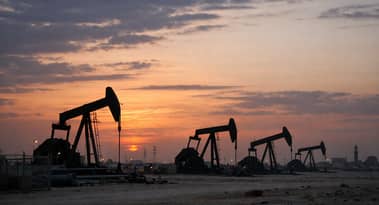
Oil prices neared six-month peaks on Friday, on track for their first weekly rise in three weeks. 

This upward movement is fueled by escalating worries about potential conflict following Washington's warning that Tehran will face repercussions if it fails to agree to a nuclear deal soon.

“The most important price driver on the oil market at present is concern about an escalation of the conflict between the US and Iran,” Carsten Fritsch, commodity analyst at Commerzbank AG, said in a report. 

US President Donald Trump has issued a stark warning to Iran, stating that "really bad things" are imminent unless Tehran agrees to limit its nuclear program within the next 10 to 15 days.

The development comes as Iran, a significant oil producer, prepares for a joint naval exercise with Russia, according to a local news agency.

This planned exercise follows Iran's recent temporary closure of the Strait of Hormuz for military drills.

Conflict in this region is a global concern, as the Strait of Hormuz—situated opposite the oil-rich Arabian Peninsula—is a vital chokepoint for international energy supply, handling approximately 20% of the world's oil. 

Any disruption in this area could restrict the flow of oil to the global market and drive up prices.

Investors and traders are increasingly buying call options on Brent crude, indicating a widespread expectation of rising oil prices, according to analysis by Saxo Bank.

This bullish sentiment is further underpinned by reports of a decline in global crude stocks and constraints on exports from major oil-producing and exporting nations.

For instance, a Thursday report from the Energy Information Administration (EIA) revealed that US crude inventories dropped by 9 million barrels, driven by an increase in both refining utilisation and exports.

At the time of writing, the price of West Texas Intermediate crude was at $66.03 per barrel, down 0.6%, while Brent was at $71.26 a barrel, also down 0.6%.

WTI had hit $67.03 a barrel and Brent $72.33 earlier in the day, their respective highest levels in more than six months.