Invezz

US-Iran conflict: This energy stock has gained nearly 10%, should you buy?
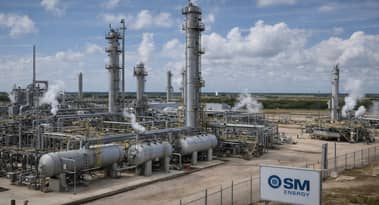
US-Iran conflict: This energy stock has gained nearly 10%, should you buy?
Ananthu C U
Mar 02, 2026, 07:50 AM
  • SM Energy jumps as Middle East conflict pushes oil prices higher.
  • Analysts see oil-driven upside, but fundamentals remain mixed.
  • Buying the stock depends largely on future oil prices and tensions.

Escalating tensions in the Middle East are once again reshaping energy markets and equity positioning.

After weekend military strikes involving the United States and Israel and expectations of continued regional violence, oil prices have moved higher, and US energy stocks have rallied in response.

KeyBanc analysts said Monday they expect oil prices to rise in the near term following the latest developments.

The firm pointed to a growing military presence in the region and a series of risk factors that had been building since December.

While the analysts noted they have limited direct commodity expertise, they argued the situation has crossed a meaningful geopolitical threshold.

The rally has created renewed investor interest in oil-weighted equities, particularly exploration and production companies whose earnings are sensitive to crude prices.

Among their picks, SM Energy is a stock that has gained 9.38% in premarket trading on Monday to trade at $25.30.

Should investors buy into this energy company?

Cyclical oil opportunity boosts energy equities

KeyBanc said it sees a “cyclical trading opportunity” for oil-exposed stocks alongside longer-term structural tailwinds.

The firm highlighted seven overweight-rated companies: Crescent Energy, Diamondback Energy, Magnolia Oil & Gas, Matador Resources, SM Energy, Talos Energy and Viper Energy.

According to the analysts, rising crude prices could translate directly into improved performance across their coverage universe.

The firm stated it sees upside potential across all names due to oil price sensitivity.

The broader market reaction has been immediate.

US energy companies gained in premarket trading as crude prices rose following the geopolitical escalation.

Higher oil prices typically improve cash flow expectations for upstream producers, which rely heavily on commodity pricing.

However, higher oil prices are also closely tied to the durability of geopolitical tensions.

If conflict de-escalates, the rally could fade as quickly as it began.

Buy SM Energy stock instantly on eToro now

SM Energy earnings: mixed fundamentals behind the rally

Among the highlighted stocks, SM Energy has drawn particular attention.

The company recently reported fourth-quarter 2025 earnings per share of $0.83.

The result missed one analyst's estimate of $0.89 but beat another consensus estimate of $0.73.

Revenue totaled $705 million, below forecasts near $766–$774 million and down from $852 million a year earlier.

Lower operating expenses supported earnings, while declining realised commodity prices weighed on revenue.

Production reached 206.9 thousand barrels of oil equivalent per day, slightly below expectations and down modestly year over year.

Oil production rose about 1% annually to 108.4 thousand barrels per day.

Pricing pressures were notable.

The company’s average realized oil price fell 16% to $58.17 per barrel, while natural gas and liquids prices also declined.

Despite softer pricing, SM Energy generated adjusted free cash flow of $198 million and reported $368 million in cash with net debt of $2.4 billion at year-end.

Wall Street sentiment remains constructive.

According to data from TipRanks, 5 analysts gave a buy rating while 4 had a hold rating in the last 9 months.

The 12-month average price target is $29.44, implying roughly 27.3% upside from Friday's closing price of $23.13.

Should investors buy?

The investment case for SM Energy and similar companies largely hinges on oil prices.

KeyBanc’s outlook depends on continued regional instability, which could support crude prices and lift energy equities further.

Yet the company’s fundamentals show a more cautious picture.

Earnings were helped by cost control rather than higher commodity prices, and revenue declined due to weaker realised pricing.

Production volumes were also slightly below expectations.

In short, the recent share strength appears tied more to geopolitics than to operational acceleration.

Investors considering the stock are effectively making a call on oil prices — and on how long the Middle East conflict lasts.