
Extended Iran war keeps oil elevated; analysts warn of volatility
AI Sentiment: 78/100 Bullish
This score is generated through AI-driven analysis of the article's content.

- US extends Iran engagement; Brent crude surges 6% to over $107.
- Escalating conflict and missile strikes raise global maritime supply risks.
- Normalization of Hormuz shipping will be a prolonged process, per Rystad.
Crude oil markets are likely to remain volatile as US President Donald Trump confirmed an extended period of military engagement in Iran.
Oil futures initially declined during the start of President Trump's address late on April 1.
However, they quickly recovered their losses, trading above $105 per barrel, after the President confirmed that the US military engagement would continue for another 2-3 weeks.
“Implicit in this message is the assumption that a cessation of hostilities by the US, whether unilateral or coordinated, will be followed by a normalization of flows through Hormuz,” Claudio Galimberti, chief economist at Rystad Energy, said in an emailed commentary.
That linkage is critical, but not automatic, as the resumption of shipping depends on security assurances, insurance coverage and a return of operational confidence.
Immediate price surge and Hormuz assurances
Despite the President claiming the core goals of Operation Epic Fury have been achieved, the Brent risk premium rose following his speech.
This increase was driven by his insistence that countries dependent on the Strait of Hormuz must act to ensure its reopening, which strongly suggests further military action is imminent.
At the time of writing, Brent crude oil was $107.21 per barrel, up 6% from the previous close. The contract had slipped below $100 per barrel on Wednesday.
Similarly, the price of West Texas Intermediate crude was 5% higher at $105.18 per barrel. Prices had fallen to as low as $96 a barrel on Wednesday.
"If tensions intensify or maritime risks increase, oil could test fresh highs as markets price in potential supply disruptions," Reuters quoted Priyanka Sachdeva, senior market analyst at Phillip Nova, in a report.
Escalating maritime risks and supply disruption warnings
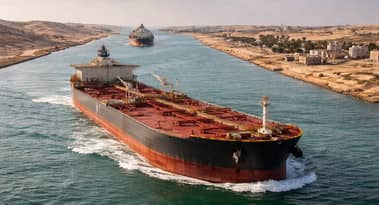
The escalating regional conflict has led to increased threats to maritime traffic.
A key incident occurred on Wednesday when an oil tanker leased to QatarEnergy was struck by an Iranian cruise missile within Qatari waters, as reported by Qatar's defense ministry.
Furthermore, the International Energy Agency's head warned that Europe's economy, previously protected by pre-war cargo contracts, is expected to face economic fallout from supply disruptions starting in April.
"Without any mention of a solid ceasefire, plan , or material off ramp, markets are left continuing to digest the administration's statements," said Rystad’s Galimberti.
Diverging market adjustments and prolonged normalisation
The market adjustments are not expected to be uniform.
Financial markets will likely react first, gradually incorporating an anticipated resolution and lowering risk premia.
In contrast, the physical system operates according to flows, Galimberti said.
The normalisation of shipping, insurance, and logistics is expected to be a prolonged process, even under optimistic conditions.
While flows could restart just days after the cessation of conflict, a return to the approximate daily volume of 20 million barrels will likely require a period of several weeks, according to Rystad.
While financial markets might begin to signal a return to normal, physical markets are likely to remain constrained for some time.
This is because the rebalancing of trade patterns and inventories, along with the months required for production to reach pre-war levels, will take longer.
It is also important to consider the non-negligible risk that the US administration's projected timeline may not fully materialise.
Should the conflict become more protracted or lead to greater damage to production and infrastructure, the reopening of the Strait would be delayed, and disruptions across global supply chains would be extended, Galimberti added.
In that scenario, both the pace of normalization and the broader market outlook would need to be reassessed.
“Until there is greater clarity on the path to de-escalation, markets are likely to remain highly volatile,” Galimberti said.
Meanwhile, President Trump stated that US gasoline pump prices, after surpassing the significant $4 per gallon average, were expected to decrease soon, and financial markets, including equities, would recover.
The US president, however, did not indicate that ground forces might be deployed.
Despite this, Trump reiterated a serious threat to strike Iran's power plants, suggesting the conflict could still deteriorate considerably before a resolution is found.
The market's next crucial indicator hinges on Iran's reaction and the global community's response, according to Rystad Energy.
It remains to be seen if Trump's pressure will successfully lead to concrete action to secure the Strait, which has not yet occurred.
“Without any mention of a solid ceasefire plan or material off-ramp, markets are left continuing to digest the administration’s statements,” the Norway-based energy agency said.
Crude oil prices retreat: Brent, WTI slip even as rebound risks persist

Trump administration eyeing stake in Venezuelan oil fields? Here's what we know

Gold slips below $4,600: could Warsh turn this pullback into something bigger?

Is Brent setting a trap below $90 as Russia quietly tightens fuel supply?

USDT gold and silver options expand crypto’s push into commodity markets
No results found
Loading articles...
Failed to load articles. Please try again.