
Rivian stock drops 5%: is Amazon reliance a growing risk?
AI Sentiment: 28/100 Bearish
This score is generated through AI-driven analysis of the article's content.

powered by

Buy Amazon (AMZN). If Rivian’s EDV rollout is structural, Amazon is the beneficiary of expanding last-mile electrification and delivery capacity. Rivian’s near-term weakness is mostly about concentration risk, not about Amazon’s logistics growth. AMZN should keep absorbing share gains in delivery volume while suppliers like Rivian manage ramp and margin volatility.
Key Risk: Amazon’s delivery strategy shifts away from Rivian EDVs (or Amazon internalizes/changes vendor terms) faster than expected.
Sell RIVN. The stock is being repriced around customer concentration: 52% of automotive revenue from Amazon, with Amazon growth framed as “structural.” That leaves Rivian exposed if Amazon slows EDV expansion or renegotiates pricing. Execution risk is also high: R2 is the growth catalyst, but ramp timing and Gen 3/autonomy tiering could push buyers to wait, capping near-term demand. Even with better losses and liquidity, the market is paying for diversification and flawless scaling—Rivian hasn’t proven it yet.
Key Risk: Amazon reduces EDV orders or demands lower unit economics, forcing Rivian to cut guidance or raise capital.
- Rivian stock falls as Amazon drives over half of auto revenue.
- R2 launch seen as key to growth amid rising execution risks.
- Loss narrows, but reliance and scaling concerns weigh sentiment.
Shares of Rivian Automotive, Inc. fell sharply on Friday after the release of its latest quarterly results.
Investors shifted focus away from improving fundamentals toward the company’s growing reliance on a single customer and the uncertain ramp-up of its next-generation vehicle platform.
The stock declined about 5.7% on Thursday.
Amazon dependence draws investor scrutiny
A key concern for investors emerged from Rivian’s first-quarter automotive revenue mix.
The company reported $908 million in automotive revenue, of which $468 million—around 52%—came from Amazon.
The surge reflects the expanding deployment of Rivian’s electric delivery vans (EDVs) across Amazon’s logistics network.
Revenue tied to Amazon rose significantly from $99 million a year earlier, underscoring the growing importance of the partnership.
What we're now seeing is a reflection of all that work, all the cumulative work that's happened to date, that's allowing deployment for our van program, within Amazon, to grow, as you pointed out, pretty meaningfully. We expect increased demand for our vans to continue
CEO RJ Scaringe emphasized that the increase is structural rather than temporary.
Still, the concentration has raised questions. Hedge fund manager Jim Chanos suggested the figures imply Rivian may be selling only about 5,000 to 6,000 vehicles per quarter in the broader market.
The company acknowledged that Amazon remains its “ideal lead customer” in the near term, highlighting its continued focus on scaling commercial van deployments.
R2 launch seen as critical growth catalyst
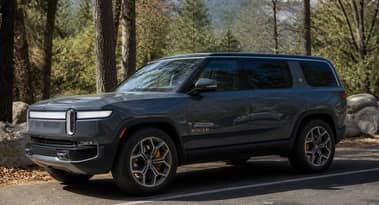
While current revenue is heavily tied to Amazon, Rivian is positioning its upcoming R2 midsize SUV as the cornerstone of its long-term growth strategy.
“I believe the R2 will be a game changer for our customers and will be a key driver of our company’s long-term growth and profitability,” Scaringe said.
The company has begun delivering R2 vehicles to employees, with broader customer deliveries expected to begin this spring.
Production is ramping at its Illinois facility, with acceleration anticipated in the second half of the year.
Rivian also highlighted significant cost improvements tied to the new platform. “For R2, our bill of materials is expected to be approximately half of our R1 platform,” Scaringe said.
Despite this optimism, analysts remain cautious about execution risks. Morgan Stanley noted that delays to Rivian’s Gen 3 platform until early 2027 could dampen near-term demand.
“The decision to tier the hardware sensor suite introduces an 'upper-bound' to autonomous capabilities on earlier generation vehicles…potentially driving more customers to wait for the next gen product,” analysts said.
Financial performance improves, but challenges persist
Rivian reported first-quarter revenue of $1.38 billion and a loss of $0.33 per share, narrowing from a $0.48 loss a year earlier.
Adjusted operating loss came in at $621 million, better than expectations of $819 million, while gross profit of $119 million exceeded forecasts.
Vehicle deliveries rose to 10,365 units, up from 8,640 a year earlier, reflecting steady growth in production and demand.
The company reiterated its full-year delivery guidance of 62,000 to 67,000 vehicles and expects an adjusted EBITDA loss of $1.8 billion to $2.1 billion as it continues investing in infrastructure, autonomy, and R2 production capacity.
Liquidity remains solid, with about $4.83 billion in cash and equivalents at quarter-end.
Rivian also plans capital expenditures of up to $2.05 billion this year, including investments in its Georgia manufacturing facility, which is expected to eventually produce up to 300,000 vehicles annually.
Despite improving cost control and narrowing losses, investor sentiment remains tied to Rivian’s ability to scale production and diversify revenue beyond Amazon, with the success of the R2 rollout likely to be a decisive factor in the company’s long-term trajectory.

Meta stock looks undervalued: settlement and AI could unlock up to 40% upside

Micron, SanDisk stocks slip premarket as a new China risk emerges

Dow futures plunge 315 points: 5 things to know before Wall Street opens

Why the S&P 500 could defy the 'September Effect' this year
Tesla stock jumps 5.5% ahead of Cybercab launch: can its $1.45T valuation hold?
No results found
Loading articles...
Failed to load articles. Please try again.