
Senate confirms Kevin Warsh as Fed chair
AI Sentiment: 35/100 Bearish
This score is generated through AI-driven analysis of the article's content.

powered by

Warsh is a known inflation hawk and the Senate confirmation is a political win for “higher-for-longer” credibility. With markets already dialing back cuts after sticky inflation and pipeline pressures, buy U.S. 2-year Treasury exposure (e.g., long 2Y UST futures) to benefit if the Fed signals fewer cuts or even a later hike. The June 16–17 meeting is the catalyst for a firmer path.
Key Risk: Warsh pivots fast toward Trump’s lower-rate pressure and signals a near-term cut cycle, crushing the hawkish repricing.
If Warsh leans against inflation and the Fed keeps policy tighter, long-end yields should rise relative to the front end. Sell 10-year Treasury exposure (e.g., short 10Y UST futures) into the June meeting window, betting the market keeps underpricing the “no more cuts” risk.
Key Risk: Inflation cools quickly or Warsh signals aggressive tightening is unnecessary, pulling long yields down and reversing the trade.
- Kevin Warsh confirmed as next Fed chair in divisive Senate vote.
- Trump-backed Fed pick takes over as inflation pressures persist.
- Markets watch Warsh closely as rate cut expectations fade.
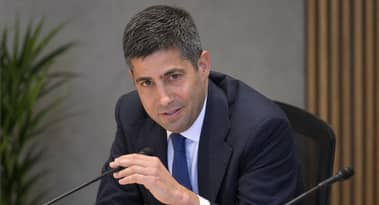
Kevin Warsh was confirmed on Wednesday as the next chair of the Federal Reserve, placing a longtime central bank critic at the helm as policymakers confront persistent inflation pressures and growing political calls for lower interest rates.
The Senate voted 54-45 to approve Warsh, 56, in what was described as the most divisive confirmation vote ever for a Fed chair.
The vote was largely along party lines, with Pennsylvania Democrat Sen. John Fetterman joining Republicans in support of the nomination.
Warsh will replace Jerome Powell, whose term as chair expires Friday after leading the central bank since 2018.
Powell will remain on the Fed’s Board of Governors, where he still has two years left in his term.
Last month, Powell said he planned to stay at least until renovations at the Fed’s headquarters are completed.
The confirmation concludes a lengthy search process that began in mid-2025 and included nearly a dozen potential candidates, among them current Fed Governors Christopher Waller and Michelle Bowman.
Trump pushes for lower interest rates
Warsh takes over at a politically sensitive moment for the Fed, with President Donald Trump openly pressuring the central bank to lower borrowing costs.
Trump repeatedly criticized Powell during his tenure, arguing that the Fed maintained overly restrictive monetary policy.
Markets, however, have recently reduced expectations for interest-rate cuts following fresh inflation data showing price pressures remain elevated above the Fed’s 2% target.
Separate reports released this week indicated accelerating pipeline inflation pressures at their highest levels in more than three years, prompting some investors to even price in the possibility of another rate increase later this year.
Rep. French Hill, R-Ark., praised Warsh’s appointment and emphasized his focus on inflation control.
“Chairman Warsh has repeatedly emphasized the importance of placing affordability and price stability at the center of our economic agenda,” Hill said in a statement. “His commitment to disciplined monetary policy will help restore confidence in our economy and support long-term prosperity.”
Familiar face returns to the Fed
This marks Warsh’s second stint at the Federal Reserve. He previously served as a governor from 2006 to 2011, a period that included the global financial crisis and the Fed’s unprecedented emergency response measures.
During that period, the Fed expanded its balance sheet beyond $4 trillion through large-scale asset purchases known as quantitative easing.
Warsh later argued those programs had gone too far.
Since leaving the Fed, Warsh has remained a vocal critic of central bank policy.
In a CNBC interview last year, he called for “regime change” at the Fed.
He has also served as a lecturer at the Stanford Graduate School of Business and held positions on multiple corporate boards.
Warsh replaces Stephen Miran on the Fed board.
Miran, appointed in 2025 to complete the remainder of Adriana Kugler’s term, frequently dissented from Federal Open Market Committee decisions by advocating for larger and more frequent rate cuts.
Wealth and ethics scrutiny likely to follow
Warsh is expected to become the wealthiest Fed chair in modern history, with personal holdings reportedly exceeding $100 million.
Under stricter ethics policies implemented following past controversies involving trading activity by Fed officials, Warsh will be required to divest many of his investments after assuming office.
His first meeting as chair of the Federal Open Market Committee is scheduled for June 16-17, where investors will closely watch for any signals on the future path of interest rates.
UBS sees two Fed hikes in 2026: what should investors buy
Fed Chair Kevin Warsh warns inflation may require more action
Fed minutes show several officials favored July rate hike as inflation persists
RBI keeps repo rate unchanged at 5.25% as volatile oil prices cloud inflation outlook
Fed holds rates in 9-3 vote; Warsh says decision not a pause, but a review
No results found
Loading articles...
Failed to load articles. Please try again.