
SoftBank soars 20%, adding $35 billion on Nvidia's record quarter

AI Sentiment: 78/100 Bullish
This score is generated through AI-driven analysis of the article's content.

powered by

Buy SoftBank Group. Nvidia’s blowout quarter is re-rating the AI supply chain, and the article shows the direct read-across: Arm +15% and SoftBank +20% as investors regain confidence in Son’s AI-heavy portfolio (Arm + OpenAI exposure). CreditSights/Fitch reiterating “outperform” on SoftBank debt adds a balance-sheet backstop to the equity rebound.
Key Risk: AI/private-market valuations roll over and SoftBank’s funding needs force dilution or a debt problem.
Buy SK Hynix. The news explicitly flags the AI memory center: SK Hynix jumped 8% alongside Nvidia-led momentum, pointing to renewed demand for high-bandwidth memory that sits at the heart of AI data-center buildouts. This is a cleaner “picks-and-shovels” way to own the Nvidia-driven AI capex cycle than the more valuation-sensitive holding-company story.
Key Risk: AI server demand slows or HBM pricing falls, cutting earnings power despite the broader chip rally.
- Nvidia earnings reignite AI rally across Asian chip stocks.
- Arm jumps as SoftBank investors double down on AI exposure.
- Nvidia buyback and revenue surge lift global tech sentiment.
SoftBank stock staged one of its sharpest rallies in years on Thursday, jumping 20% in Tokyo and adding about $35 billion in market value after Nvidia’s results showed once again how strongly AI is driving global markets.
The trigger came from California, where Nvidia reported a record quarter that beat already elevated expectations.
By the time Asian markets opened, the read-across was clear: Nvidia’s numbers lifted Arm Holdings, Arm lifted SoftBank, and Masayoshi Son’s big AI bets suddenly looked more promising and less risky to investors.
The Nvidia effect
Nvidia reported first-quarter fiscal 2027 revenue of $81.6 billion, up 85% from a year earlier, powered by another surge in data-center demand.
The chipmaker also authorised an additional $80 billion in share buybacks and increased its dividend, underscoring the substantial cash-generating force behind the AI infrastructure boom.
That single earnings print rippled quickly through Asian markets.
Arm Holdings, the chip designer majority-owned by SoftBank, rose about 15%, while SoftBank’s Tokyo-listed shares surged 20%, wiping out five straight sessions of losses.
For a company whose valuation is tightly linked to investor appetite for AI, Nvidia’s quarter gave the market a fresh reason to reprice Son’s portfolio.
SoftBank’s AI bet pays off
For SoftBank, the rally was about more than Arm as Son has spent the past year pushing the group deeper into AI, most notably through OpenAI.
SoftBank has invested more than $30 billion in the ChatGPT maker, while its fiscal 2025 results showed about $45 billion in gains tied to the OpenAI stake.
That matters because SoftBank’s story had begun to split investors.
Bulls saw a holding company with rare exposure to Arm and OpenAI. Bears saw heavy funding needs, private-market valuation risk, and a balance sheet increasingly stretched by Son’s ambitions.
Analysts at CreditSights, a Fitch Ratings unit, also recently reiterated an “outperform” recommendation on SoftBank debt, adding some balance-sheet credibility to a stock story often dominated by Son’s risk appetite.
Asia’s AI trade lights up
The rally did not stop with SoftBank, as across Asia, the Nvidia supply-chain trade came alive.
Taiwan Semiconductor Manufacturing Co. rose about 2%, SK Hynix jumped 8%, Renesas gained 7%, Tokyo Electron advanced 5.4%, Advantest added 2.8%, and Samsung Electronics climbed 6.7%.
The pattern was familiar but powerful. TSMC is Nvidia’s key manufacturing partner. SK Hynix and Samsung sit at the centre of the high-bandwidth memory market.
Tokyo Electron and Advantest provide crucial equipment and testing exposure.
Renesas, while less directly tied to Nvidia’s flagship AI chips, benefited from the broader semiconductor repricing.
Samsung had a second tailwind after reaching a tentative labour deal that suspended a strike involving tens of thousands of workers.
That helped turn a Nvidia-led chip rally into a wider Korean market move, with South Korea’s benchmark index also sharply higher.

Dow futures plunge 315 points: 5 things to know before Wall Street opens

Why the S&P 500 could defy the 'September Effect' this year

Tesla stock jumps 5.5% ahead of Cybercab launch: can its $1.45T valuation hold?

KOSPI rebounds as chip stocks recover while Nikkei 225 slides on bond shock
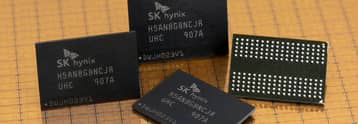
SK Hynix stock rebounds, but a new HBM4 risk is getting harder to ignore
No results found
Loading articles...
Failed to load articles. Please try again.