
Can Ryanair’s debt-free balance sheet boost its low-cost edge?
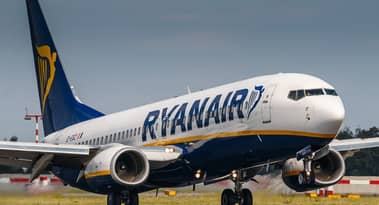
AI Sentiment: 78/100 Bullish
This score is generated through AI-driven analysis of the article's content.

powered by

Buy. Ryanair is effectively debt-free after repaying its last €1.2bn unsecured bond, and its full 737 fleet is unencumbered. That cuts financial risk, lowers interest drag, and gives management flexibility to outcompete on fares while rivals stay constrained by debt/lease obligations and refinancing risk. Expect multiple expansion as investors re-rate Ryanair’s balance-sheet resilience and cash-flow durability.
Key Risk: A sharp demand hit (recession or fare collapse) forces Ryanair to fund growth with expensive new debt or capex, erasing the balance-sheet advantage.
Sell. Use Ryanair’s step-change in balance-sheet strength as a relative trade: rotate out of highly levered European airlines that still carry meaningful bond/lease encumbrances. When one major carrier becomes financially “lighter,” it can defend market share and pricing, pressuring weaker peers’ margins and credit profiles.
Key Risk: Peers’ costs fall faster than expected (fuel, labor, airport charges), letting them hold margins despite higher leverage, narrowing Ryanair’s relative advantage.
- Ryanair repaid its final €1.2 billion unsecured eurobond.
- Airline says it is effectively debt-free for first time since 1997.
- Entire fleet of 620 Boeing 737 aircraft is now unencumbered.
Ryanair said it had repaid its final outstanding bond, leaving the Irish low-cost carrier effectively debt-free for the first time since it listed on the stock exchange in 1997.
The airline repaid a 1.2 billion euro unsecured eurobond issued in May 2021, a company statement said.
The move means Ryanair’s entire fleet of 620 Boeing 737 aircraft is now unencumbered, giving the carrier greater financial flexibility at a time when European airlines continue to face elevated costs, aircraft delivery delays and competitive pressure on fares.
Final bond repayment clears balance sheet
The repayment marks a significant balance-sheet milestone for Ryanair, which has built its business model around low costs, high aircraft utilisation and a disciplined approach to capital spending.
By clearing the final eurobond, the airline has removed the last major piece of outstanding bond debt from its balance sheet.
Ryanair said this leaves it effectively debt-free, a position it has not held since its 1997 stock market listing.
The airline’s 737 fleet is now fully unencumbered, meaning the aircraft are not pledged as security against debt.
That can strengthen a company’s borrowing position, reduce financial risk and give management more room to manoeuvre during periods of market stress.
For Ryanair, the development also comes as airlines across Europe remain under pressure from higher labour costs, airport charges and aircraft supply constraints.
Boeing delivery delays have affected growth plans across the sector, while carriers are also navigating volatile fuel prices and shifting consumer demand.
Cost advantage in focus
Ryanair’s chief financial officer said the repayment would widen the company’s cost gap with rivals.
That cost gap has long been central to Ryanair’s strategy.
The airline has used a lower-cost operating model to offer cheaper fares, fill aircraft at high load factors and expand across European short-haul routes.
A debt-free balance sheet could further support that position by reducing interest expenses and improving financial resilience.
It may also give Ryanair more flexibility when negotiating aircraft purchases, airport agreements or future financing needs.
The company has previously leaned on its investment-grade profile and access to bond markets to support fleet expansion.
However, the latest repayment suggests management is prioritising balance-sheet strength as the airline enters its next phase of growth.
Fleet now unencumbered
Ryanair said its 620 Boeing 737 aircraft are now unencumbered following the repayment.
That is important because aircraft are among the most valuable assets held by airlines.
An unencumbered fleet can provide optionality, including the ability to raise secured financing in the future if market conditions require it.
It also gives the company a stronger position than many rivals that carry higher levels of debt or lease obligations.
Airlines often use a mix of owned aircraft, leased aircraft and secured financing, leaving balance sheets exposed to refinancing costs when interest rates rise.
Ryanair’s position may therefore be viewed favourably by investors, particularly as the sector remains sensitive to fuel prices, wage inflation and travel demand.
Bond market return possible from 2029
Despite the debt-free milestone, Ryanair may not remain absent from bond markets indefinitely.
The company’s chief financial officer said the airline could revisit bonds from 2029.
That suggests Ryanair may consider fresh borrowing if it sees attractive financing conditions or needs capital to support aircraft purchases and expansion.
For now, the repayment gives the airline a cleaner balance sheet and a stronger financial base.
It also reinforces Ryanair’s message that its low-cost model remains a core advantage in European aviation.
The milestone comes at a time when many carriers are still rebuilding financial strength after the pandemic-era shock, while facing higher operating costs and constrained aircraft supply.
Ryanair’s debt-free position may help it withstand those pressures better than competitors, particularly if fare growth slows or economic conditions weaken.
Investor significance
For investors, the repayment underlines Ryanair’s focus on financial discipline.
An effectively debt-free balance sheet can reduce risk, improve cash flow visibility and support shareholder returns over time.
It may also strengthen market confidence in the airline’s ability to fund growth without relying heavily on external debt.
However, the outlook will still depend on passenger demand, fuel prices, aircraft deliveries and broader economic conditions across Europe.
Even so, the final bond repayment gives Ryanair a distinction few large airlines can claim: a fully unencumbered aircraft fleet and an effectively debt-free balance sheet.
IAG share price forecast: what next for British Airways parent after earnings?
IAG share price in focus as Q2 earnings loom: buy or sell?
easyJet share price in focus as Apollo tables richer bid to outflank Castlelake
Why IAG and Rolls-Royce shares are surging this month

Airlines trim 13,000 May flights as jet fuel costs spike globally
No results found
Loading articles...
Failed to load articles. Please try again.