
Interview: ENSOOL CEO on turning SME rooftops into Europe’s next solar asset
AI Sentiment: 72/100 Bullish
This score is generated through AI-driven analysis of the article's content.

powered by

Buy exposure to ENSOOL’s planned €500m–€1bn YieldCo via its primary/secondary notes or preferred equity (where available). The thesis: Europe’s solar slowdown shifts winners from “capacity growth” to “execution + underwriting.” ENSOOL’s moat is disciplined site selection before panels go up (data quality, standardized contracts, in-house EPC feedback loop) and credit work up front, turning fragmented SME rooftops into repeatable infrastructure cash flows.
Key Risk: YieldCo cash flows break because too many SME PPAs underperform (customer credit or generation/contract issues), forcing higher losses and killing repeatability.
Sell/avoid broad, low-discipline distributed solar developers and EPC-light “volume-first” names; rotate into companies with strong portfolio underwriting, long-term contracted cash flow, and in-house execution capability. The thesis: as subsidies/incentives fade and grid delays rise, only platforms that can standardize data, contracts, and delivery at scale survive; “sign first, fix later” models fail.
Key Risk: A competitor with better financing/contracting terms scales faster and captures the best sites, compressing returns and leaving weaker players with the bad portfolio.
- EU solar growth slows as market shifts from momentum to execution.
- ENSOOL sees SME rooftops as the next institutional solar asset class.
- Gonzalez says aggregation can turn fragmented sites into infrastructure.
Europe’s solar boom is entering a harder phase.
After years of rapid growth, new EU solar additions have slowed, exposing a market where cheap capital, generous subsidies and high power prices can no longer do all the work.
For Sandro Gonzalez, CEO of ENSOOL, that shift is not a warning sign for investors, but a test of who can execute.
In an interview with Invezz, Gonzalez argues that the next stage of Europe’s energy transition will be shaped less by headline capacity targets and more by the ability to finance, standardise and manage thousands of smaller assets.
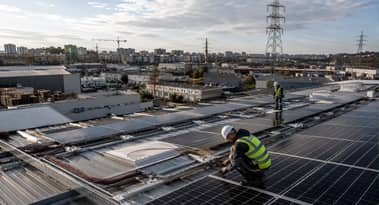
ENSOOL is betting that SME rooftops and commercial sites, long viewed as fragmented and difficult to underwrite, can become an institutional-grade infrastructure asset class when aggregated properly.
The goal is ambitious: build a distributed solar platform capable of supporting a €500 million to €1 billion YieldCo.
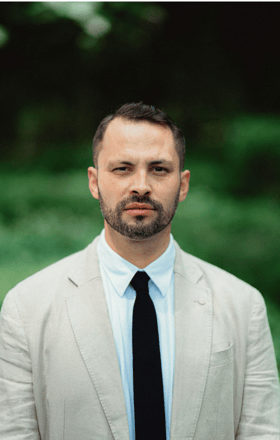
Sandro Gonzalez, CEO of ENSOOL
Excerpts:
Invezz: EU solar deployment has slowed, with industry data pointing to the first annual decline in new additions in nearly a decade. Why does that make this a good moment to build a distributed solar platform rather than a reason for investors to pause?
Sandro Gonzalez: I would say the decline in EU solar additions should not be read as a demand problem.
Europe still added roughly 65GW of solar last year, and total installed capacity is now above 400GW.
The market is simply moving into a phase where execution matters more than momentum. The first wave was easier to finance with power prices being high and subsidies being stronger.
Now the market is different, grid connections are slower, and incentives are being reduced. The issue is not a lack of demand, but the market is becoming harder to execute in.
For me, the case for distributed solar is clearer in this environment. When growth slows, it shows where the market is getting stuck - not in demand, but in delivery.
Businesses still want cheaper, cleaner power and more control over energy costs. The challenge is that smaller sites remain too fragmented, making financing and asset management harder.
Europe currently has around 406 GW of installed solar capacity and needs to reach closer to 750 GW by 2030.
This gap will not be closed by utility-scale projects alone.
In today’s slower growth environment, it becomes even clearer why a professional distributed platform for rooftops and C&I sites is essential: it directly solves the real bottlenecks in financing, standardization, and asset management.
Invezz: Institutional capital is still far more comfortable with utility-scale solar. SME rooftops are seen as fragmented, operationally heavy, and harder to finance. How do you turn that reputation for complexity into a structural advantage?
Sandro Gonzalez: Individual SME rooftops look too small and operationally heavy for institutional capital.
Once you aggregate hundreds or thousands under identical standards, unified data, and a single operating model, they become a truly scalable asset class.
This complexity itself becomes the moat as utility-scale is easier to understand but far more crowded.
Distributed solar is harder because the sites are smaller and more fragmented, making financing and asset management more difficult.
The result is a competitive advantage for the companies that can execute well in a market most others can't.
Invezz: Aggregating thousands of small rooftop installations into a single portfolio looks clean on a slide deck. How does it actually work on the ground, and what is the first thing that breaks when you try to scale it?
Sandro Gonzalez: Aggregation works only if the portfolio is built before the panels go up. The mistake is to sign sites first and clean them up later.
The first pressure point is data. If you do not know the roof, the customer load, and the contract risk going in, the portfolio will look fine on paper and weak in operation.
The work has to start earlier. That means rejecting poor sites quickly, standardizing contracts and installation requirements across every contractor, and tracking live performance data once a site is commissioned.
Aggregation is less about chasing volume and more about discipline. A portfolio only works if every asset has passed the same basic test before capital is deployed.
The first pressure point is always data quality. If you don’t know the roof, the customer load profile, and the contract risks upfront, you end up with portfolios that look good on paper but create problems in operations.
That’s why we reject weak sites early and enforce strict standardization of contracts and installation requirements across every contractor.
Invezz: Your model depends on SMEs signing long-term Power Purchase Agreements and staying reliable buyers for 15 to 20 years. How do you get a small business owner comfortable with that kind of commitment, and how do you underwrite the credit risk sitting behind it?
Sandro Gonzalez: The way to get an SME comfortable is not to lead with a 20-year contract. You start with the problem they actually have.
Their energy costs are harder to predict. Capex is tight. They do not want another asset to manage.
Once the savings are clear, the contract becomes easier to understand. They are not buying a solar project. They are buying cheaper power with less operational burden.
Credit work must happen before contracts are signed. Weak buyers, sites, or contracts simply do not enter our portfolio.
We reduce risk through rigorous selection at entry and broad diversification across customers, not by aggregating poor credit and hoping it disappears.
Invezz: You keep EPC and delivery in-house rather than outsourcing. Why should infrastructure investors read that as a competitive moat rather than an added layer of execution risk you are taking onto your own balance sheet?
Sandro Gonzalez: Keeping EPC in-house adds responsibility, but in distributed solar, execution is exactly where most value is won or lost.
When you outsource everything, you also outsource standards, timelines, and direct site feedback.
Retaining this knowledge internally means every project improves the next one, costs become more predictable and portfolio quality rises measurably.
If that knowledge sits inside the business, every project improves the next one.
Costs become more predictable, quality becomes easier to control, and the portfolio gets built with fewer surprises.
In a market made up of many small assets, control matters.
Invezz: You are targeting a €500 million to €1 billion solar YieldCo. What is the moment it stops being a platform vision and becomes genuinely IPO-ready? Is it contracted megawatts, recurring cash flow, country diversification, or something else entirely?
Sandro Gonzalez: IPO readiness is not defined by megawatts alone. It comes when investors see clear repeatability in the portfolio: stable performance, predictable cash flows, and an operating model that truly behaves like infrastructure.
Only then does the platform move from vision to investable reality.
Contracted capacity matters, but only if the assets are performing - that’s what a YieldCo has to be judged on, and it’s what makes a platform investable.
Country diversification helps, but it cannot be cosmetic.
Entering new markets before the first portfolio is stable just adds risk. Once the model is working, new markets strengthen the cash flow base.
Invezz: Distributed energy and institutional capital have historically spoken different languages. What is the single biggest misconception the investment community carries about what ENSOOL is actually building?
Sandro Gonzalez: The biggest misconception is that ENSOOL is simply another solar company.
What we are building is the infrastructure layer that turns thousands of small, scattered energy assets into something institutional capital can underwrite.
Looked at individually, each SME rooftop is too small.
Aggregated under the right structure, distributed solar becomes just as investable as utility-scale and arguably more resilient to market swings.

Interview: The Gold Bullion Company MD on what could make or break gold’s next move

Europe's 2026 digital identity deadline opens a $47B market

Interview: Agentic AI to drive blockchain adoption, says Animoca Brands' Evan Auyang

Is UK falling behind amid political uncertainty? Zero Sum finds out

Interview: Skydo's Ishita Chawla explains the hurdles of claiming US tariff refunds
No results found
Loading articles...
Failed to load articles. Please try again.