
SK Hynix’s $26.5 billion Nasdaq debut explained: what investors should know

AI Sentiment: 72/100 Bullish
This score is generated through AI-driven analysis of the article's content.

powered by

Buy SK Hynix ADRs (SKHY). The issue was 7x oversubscribed at a premium, signaling institutions want clean, liquid US exposure to the AI-memory bottleneck. SKHY’s HBM leadership and Nvidia proximity should keep it a core beneficiary as AI data centers expand. The Nasdaq listing should also narrow the valuation gap vs Micron by removing Korea-market friction and attracting more US capital.
Key Risk: AI server demand slows and HBM pricing/margins fall faster than SK Hynix can defend supply discipline.
Buy Micron (MU) as the “valuation catch-up” winner. If SK Hynix’s Nasdaq access draws incremental AI-memory funds and compresses its discount, the whole memory complex can re-rate. MU is the closest US-listed peer with meaningful AI-memory exposure, so it should benefit from sector inflows even if SKHY steals some incremental attention.
Key Risk: Memory oversupply arrives (capacity ramps) and MU’s earnings power breaks, overwhelming any multiple expansion from flows.
- SK Hynix priced 177.9 million ADSs at $149, raising about $26.5 billion.
- Demand exceeded available shares by more than seven times ahead of debut.
- Nasdaq trading starts as SKHYV before the ticker changes to SKHY Monday.
SK Hynix raised about $26.5 billion after pricing 177.9 million American depositary shares at $149 each.
The fresh raise sets up a closely watched Nasdaq debut that will test Wall Street’s appetite for the AI-memory boom.
Demand exceeded the available stock by more than seven times, despite a recent pullback in global chip shares.
The transaction is not a conventional initial public offering as SK Hynix is already publicly traded in Seoul, where its primary listing will remain.
Its US shares begin when-issued trading on Friday under the symbol SKHYV, then change to SKHY when regular trading starts on Monday, July 13.
SK Hynix: Record demand puts the AI-memory boom back in focus
The final price was 2.7% above the Korean stock’s average over the previous three sessions.
SK Hynix is issuing 17.79 million new common shares, represented by 177.9 million US depositary shares, with 10 depositary shares equal to one Seoul-listed share.
That premium, together with an order book more than seven times covered, shows that institutions were prepared to look beyond recent volatility.
SK Hynix’s Korean shares had fallen by about a quarter in two weeks before the debut, but remained roughly 680% higher over the previous 12 months.
The enthusiasm rests largely on SK Hynix’s leadership in high-bandwidth memory, or HBM.
These chips sit alongside advanced processors in AI servers, enabling huge volumes of data to move rapidly.
Their limited supply has made memory one of the most important constraints in the expansion of AI data centres.
“SK Hynix leads on share and Nvidia proximity,” Daniel Newman, chief executive of technology research firm Futurum Group, told Reuters.
Newman said Micron’s competing strengths include power efficiency, its US position and its progress from third place.
Nasdaq access could unlock a higher valuation
The listing gives US investors a more straightforward way to own SK Hynix.
Previously, many had to trade the Seoul shares outside normal US hours or use thinly traded, unsponsored over-the-counter receipts.
“SK Hynix’s Nasdaq listing provides direct, frictionless exposure to one of the most compelling pure-plays on the AI memory cycle,” Di Zhou, portfolio manager at Thornburg Investment Management, told Fortune.
That access may help reduce the company’s valuation discount to Micron.
Before the debut, SK Hynix traded at about 5.5 times expected earnings over the next 12 months, compared with roughly 6.7 times for its US rival.
A liquid, dollar-denominated Nasdaq security could draw funds that were previously unable or unwilling to buy shares in Korea.
Also read: This memory stock may be a better pick than Micron or SanDisk
Dilution and the memory cycle remain the key risks
The transaction is not without its drawbacks, as SK Hynix is issuing new shares, leaving existing shareholders with a smaller ownership stake.
Lee Nam-woo, chairman of the Korea Corporate Governance Forum, told BusinessKorea that he supported the ADR listing but opposed using newly issued shares “when free cash flow is abundant”, arguing that governance reforms should come before efforts to secure a higher valuation.
The larger concern is the memory industry’s history of boom-and-bust cycles. Today’s shortages and strong pricing could eventually encourage too much new capacity.
If major technology companies slow AI spending, supply could catch up quickly, pressuring memory prices, margins and earnings.
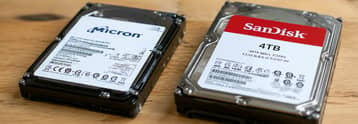
Memory prices could jump 60%: why Micron and SanDisk are breaking out again

Apple’s foldable iPhone moment is here: why buying the stock could backfire

IAG share price eyes crash to 400p as jet fuel costs escalates

Nvidia stock is 5% below its record: why September 10 suddenly matters

Scottish Mortgage shares hit crucial price amid SpaceX, Anthropic catalysts
No results found
Loading articles...
Failed to load articles. Please try again.