Invezz

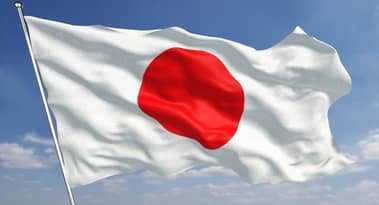
Crypto market could mature due to Japanese regulations
Crypto market could mature due to Japanese regulations
Ali Raza
Apr 01, 2020, 06:54 AM
  • The Japanese law firm says that strict crypto regulations will likely help the crypto market in the long run.
  • The stricter the regulations, the more comfortable will institutional investors feel about crypto.
  • Japan is about to introduce two new crypto acts, which will enter into force in May of this year.

Many have described Japan’s crypto regulations as rather strict. Meanwhile, people also believe that this might be the wrong approach with cryptos. According to some, digital currencies require the freedom to evolve and for the market to mature. However, one law firm disagrees, claiming that strict regulations are what will eventually help the market.

The company in question is So & Sato, a
law company headquartered in Japan. The firm specializes in cryptocurrency and
blockchain, and it recently released a new report. The report speaks of various aspects
of cryptocurrencies in Japan. It has covered numerous important aspects, from
crypto derivatives to tokenized securities.

One of its representatives, Joerg Schmidt,
recently spoke about the local crypto regulations. Schmidt stated that they are
much stricter than elsewhere. However, he also stressed that this will be
beneficial in the long run. Due to the strict rules, traditional finance is not
afraid of getting involved, like it is in other countries.

“What seems to be a regulatory overkill,
at first sight, is likely to help the market to mature in the mid to long
term,” he said. He also stressed the importance of the involvement of
regulatory players. Thanks to the regulations, he expects them to ‘increase
their stake in the digital asset space.’

Japan is likely to be more open to
the US and similar exchanges

As some may know, the regulations in question
mostly fall under the PSA and FIEA. They will come into force at some point in
May 2020. Under the PSA, cryptocurrency exchanges will have to employ a third
party to safeguard traders’ money. As such, the user-owned funds will move
separately from the exchange’s own cash flow.

Of course, the exchanges already have certain obligations under the current law. One of them is that they must obtain a license via the country’s regulator, the FSA. Foreign exchanges that wish to service Japan’s users need the same license, plus the one in their home jurisdiction.

Currently, there are 23 registered exchanges
in the country, although all of them are local exchanges. The most recent
exchange to receive the license is OKCoin, which owns a subsidiary in Japan.

The law firm concluded its report with a
prediction that the most likely exchanges that could receive the license might
come from countries like the US. Regulations are strict and thorough in such
countries, and Japan is likely to be more open to them.