Invezz

Blockchain failed to deliver on its promises: Olga Skorobogatova
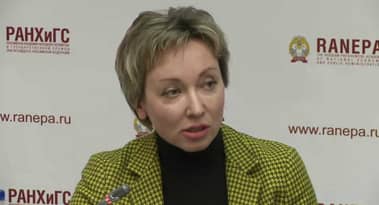
Blockchain failed to deliver on its promises: Olga Skorobogatova
Ali Raza
Apr 03, 2020, 05:40 AM
  • Russian central bank deputy governor, Olga Skorobogatova, said that blockchain did not fulfill its promises.
  • She remembers claims that everything will run on the blockchain 'in five years,' which is still not the case.
  • She believes that cryptos cannot become the means of payment due to volatility and use in criminal purpose.

Olga Skorobogatova, the first deputy governor of Russian Central Bank, spoke recently about blockchain technology. Yesterday, April 2nd, Skorobogatova said in an interview with Euromoney that blockchain failed to deliver on its promises.

Skorobogatova recalled that, five years ago, many claimed that blockchain will be the universal solution for finance. People expected this to take place by 2020, but it clearly did not. Technology is still in development, progressing rather slowly.

Blockchain cannot be a universal solution

Skorobogatova experimented with blockchain technology for the past three years. She used the Masterchain platform, which is a local blockchain network for transferring sensitive data. One example is mortgage accounting. Following this period, Skorobogatova had to say the following:

“Blockchain is a great fit for things like letters of credit and guarantees because it is essentially a technology of trust."

She reflected on what she heard several years ago:

"I remember being told by some tech companies back then: ‘Olga, in five years everything will be powered by blockchain, there will be no other technologies.' I responded that this technology would work in cases when it would create additional value but not as a substitution for everything. Time has proven me right.

Russia still in conflict about crypto

She also commented on digital currencies, saying that she does not believe that they could be a means of payment. According to her, they are too risky due to high volatility and no guarantee for crypto savings. In addition to that, cryptos see a lot of use in money laundering operations.

Even stablecoins raise more questions than answers right now, which she noticed during the central bank's talks with other regulators. Skorobogatova said that she understands that people want fast digital payments. But, she thinks that this is easy to solve with a national fast payment platform.

CBDCs, while popular right now, are not the answer, for her. She also stressed that no one, in or out of Russia, gave a convincing answer or explanation on why are CBDCs better than electronic fiat payments.

As for crypto regulations in Russia, it appears that the regulators have postponed them again. The 'On Digital Financial Assets' bill still sees disagreements, just like it did in the past. The central bank opposes the legalization of digital currencies. Meanwhile the Russian State Duma Committee sees some useful applications.