Invezz

China vs. India: Who dominates maritime trade as Indian dockworkers' strike looms?
China vs. India: Who dominates maritime trade as Indian dockworkers' strike looms?
Noris Soto
Aug 24, 2024, 07:05 AM
  • Indian ports handle close to 20 million twenty-foot equivalent container units (TEUs) a year.
  • India's maritime trade heavily relies on efficient seaport functioning.
  • The strike raises concerns about potential economic losses and supply chain disruptions if it continues.

India's maritime trade faces a critical juncture as over 20,000 dockworkers prepare for a nationwide strike starting August 28. 

This strike, driven by demands for pay scale revisions, arrears payments, and protection of existing benefits, threatens to disrupt India's bustling ports, which are crucial to its economy. 

As tensions rise, the strike could reshape the competitive dynamics between India and China in the global maritime trade.

India's maritime trade: How big is it?

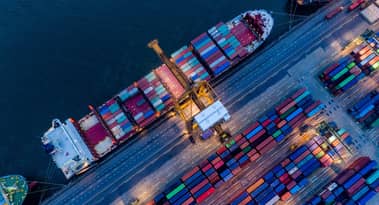
India's economy heavily relies on maritime trade, with its ports handling 19.7 million twenty-foot equivalent container units (TEUs) in 2022, according to the United Nations Conference on Trade and Development (UNCTAD). 

This volume places India among the top ten countries globally for container throughput. 

However, it pales in comparison to China, the undisputed leader, which handled a staggering 269 million TEUs in the same year.

India's ports are not just entry and exit points for goods; they are vital arteries supporting the nation’s economic lifeblood.

For instance, in 2021, India exported $858 billion in Information and Communication Technology (ICT) goods, second only to Hong Kong.

These exports, including computers, electronic components, and consumer electronics, highlight India's integral role in the global trade network.

Source: Statista

How serious is the dockworkers' strike?

The impending dockworkers' strike threatens to bring India's port operations to a grinding halt.

With cargo operations at major ports potentially suspended, the consequences could be severe.

Delays in vessel loading and unloading would create bottlenecks in the supply chain, affecting industries reliant on the timely movement of goods.

For a country like India, where the economy is deeply intertwined with exports—ranging from electronics to fashion—prolonged disruptions could be catastrophic.

The ripple effects would extend beyond the ports, impacting retailers, manufacturers, and other sectors dependent on a steady flow of goods and raw materials.

Businesses may be forced to explore alternative routes or modes of transportation, potentially escalating logistical costs and affecting the pricing of final products.

The broader economic implications of such a disruption could be far-reaching, straining India’s trade relationships and challenging its position in the global market.

India's position in global container throughput

India’s position in global container throughput is critical to its economic stability.

While India handled 19.7 million TEUs in 2022, this figure is dwarfed by China’s 269 million TEUs, reflecting the intense competition within Asia's maritime trade sector.

Other key players, such as the United States, with 62 million TEUs, and the UAE, with 20 million TEUs, also highlight the diverse and competitive nature of global maritime trade.

The looming strike is more than just a labor issue; it’s a critical moment for India’s maritime trade-dependent economy.

Retailers and manufacturers could face operational challenges, with the supply chain sector bearing the brunt of the disruption.

The potential for prolonged delays may force businesses to seek alternatives, driving up logistical costs and possibly inflating prices for consumers.

Moreover, the global trading community may start looking at other ports to avoid potential delays, affecting India's market share in the global trade arena. Such a shift could have lasting repercussions, challenging India's economic resilience and its ability to compete with maritime powerhouses like China.

In a region where maritime trade is fiercely competitive, any prolonged disruption could alter the balance of power, with China poised to capitalize on any weaknesses. The stakes are high, and how India navigates this challenge will have lasting implications for its future in global trade.