
Exclusive: Diversifying export markets helping us mitigate weak demand amid global challenges, says Jindal Stainless CFO
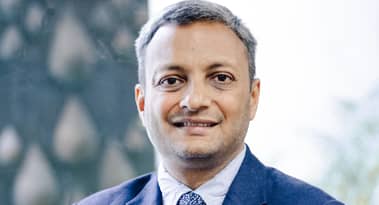

- Momentum in domestic market expected to continue in second half of FY25.
- Smaller manufacturers in the stainless steel sector under significant pressure from high Chinese imports.
- Expansion into new export markets to help achieve 10% export volume projection amid falling exports to US, EU.
2024 has been a challenging year for Indian steelmakers as India's finished steel imports from China reached an all-time high during the first eight months of FY25, and India became a net importer of steel during the period.
India shipped in 6.5 million metric tons of finished steel, a 26.6% increase year-on-year, while China sent 1.96 million metric tons of steel to India during April-November, up 22.8% year-on-year.
With stainless steel making for an important component of China's steel exports, along with hot-rolled coils, plates, and others, the rising imports has impacted the broader industry, and MSME producers are especially under significant pressure.
Invezz spoke to Anurag Mantri, executive director and group CFO of Jindal Stainless, India's largest stainless steel producer to understand the impact on the industry and how domestic demand is shaping up for the company in the second half.
Mantri also shares how the company plans to tackle falling exports and his views on whether US President Donald Trump's promised tariffs will compound woes for the industry or not.
Excerpts:
Domestic demand: fueling growth for Indian steel in H2FY25
Invezz: How is the domestic demand for stainless steel shaping up in the second half? What are the growth drivers and challenges? Any new, emerging sectors generating demand?
The domestic market has shown steady growth in the first half of FY25, and this momentum is expected to continue.
Several sectors, including railways, industrial P&T, and lifts and elevators, are driving demand.
Projects like Vande Bharat sleeper trains and Vande Metro are adopting higher-grade stainless steel, which is a positive shift for the industry.
The government also announced to spend INR 11.11 trillion on infrastructure in the financial year ending March 2025, which is expected to fuel demand.
Imports from China a challenge ailing the industry
However, challenges such as substandard imports from China and the need for safeguard, stricter implementation of BIS standards
remain to develop the Indian stainless steel manufacturing ecosystem.
Apart from this, we can expect demand from new-age areas such as aerospace, renewable energy, blue and green economy, to name a few.
Invezz: How do things look on the raw material front? You have recently entered into a JV in Indonesia.
The commissioning of our nickel pig iron (NPI) smelting facility in Indonesia ahead of schedule marks a strategic milestone.
This ensures greater raw material security, particularly in the face of the EU's efforts to curb scrap imports.
The ramp-up of this facility will help us strengthen raw material security and operational efficiency.
Invezz: India's finished steel imports from China hit a 7-year high this year. What is the government's stance on imposing a duty or tax on imports from China? How does this affect JSL’s revenue and bottom line?
The rise in imports from China and Vietnam has adversely impacted MSME producers and undermines the 'Make in India' initiative including the employment generation and skill development in the country.
These non-level playing imports pose significant challenges.
All industry stakeholders are actively engaging with the government to advocate for measures like safeguard, anti-dumping duties,
countervailing duties etc to create a level playing field for domestic stainless steel manufacturers.
Global export challenges: JSL diversifies markets amidst US & EU slump
Invezz: Your export volumes fell by about 28% during H1 due to global challenges. With recent tariff announcements in the US, how will this affect steel imports to India?
Global challenges, including weak demand in the US and EU, red sea crisis, west asia war, have affected exports.
The proposed US tariffs are unlikely to significantly impact imports into India directly but may create ripple effects globally.
Our focus remains on diversifying export markets, with regions like South America, Korea, Canada, Middle East etc showing potential.
Additionally, domestic demand strength helps balancing the shortfall to an extent.
Invezz: Do you stick to the revised guidance of 10–15% volume growth?
We are currently maintaining our guidance of 10–15% volume growth for FY25.
While challenges such as global market turbulence due to Red Sea crisis, weak EU & US demands have affected volumes, our strategic focus on value added segments and operational efficiency helps us in partially mitigating these challenges to still deliver a good volume growth in the last two years.
Invezz: Germany's economic slowdown has contributed to falling exports. What is your forecast for export volumes in the second half?
Germany and broader European markets continue to face economic headwinds, with no immediate signs of recovery.

More details of the mega Anthropic IPO are coming out: here’s what we know

Software stocks are back from the dead as AI fuels growth: can the rally continue?

GoPro stock soars 200% after Markiplier stake, $285M Starman deal

SpaceX stock rally meets another lockup expiry test on September 9: what to expect

Dow closes 270 pts lower as strong jobs report lifts September Fed rate-hike bets
No results found
Loading articles...
Failed to load articles. Please try again.