
White House alleges China stole AI at industrial scale: report
AI Sentiment: 35/100 Bearish
This score is generated through AI-driven analysis of the article's content.

powered by

US ramps “defense + intelligence sharing” against AI theft and proxy/jailbreak activity. Palantir is a direct beneficiary of government and enterprise demand for data fusion, threat monitoring, and secure deployment workflows. The memo’s focus on industrial-scale extraction and evasion (proxy accounts) points to higher budgets for detection and compliance tooling—where Palantir has a proven footprint.
Key Risk: A policy shift that targets only chip/export controls and leaves software/security budgets flat.
If the US responds with tighter export controls/sanctions tied to “distillation campaigns,” China-linked AI demand gets hit and pricing power can compress. Even if Nvidia sells elsewhere, the market will re-rate near-term growth and gross margin risk as regulators broaden restrictions beyond the most advanced chips.
Key Risk: Export controls stay narrow (only top-end parts) and China demand is quickly rerouted without margin damage.
- US flags China using AI distillation to replicate US models cheaply.
- White House warns of IP theft, plans crackdown on AI misuse.
- Lawmakers push curbs to slow China in intensifying AI race.
The White House has accused Chinese entities of conducting “industrial-scale” theft of intellectual property from American artificial intelligence labs, marking a fresh escalation in tensions between the world’s two largest economies over control of next-generation technology.
In a memo seen by the Financial Times, Michael Kratsios, director of the White House Office of Science and Technology Policy, said the US government had evidence that foreign actors—primarily based in China—were systematically extracting value from leading American AI systems.
“The US government has information indicating that foreign entities, principally based in China, are engaged in deliberate, industrial-scale campaigns to distil US frontier AI systems,” Kratsios wrote.
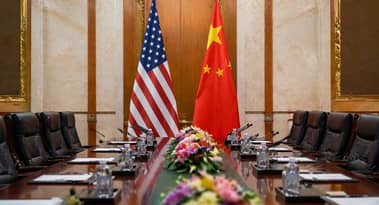
The issue comes into sharper focus ahead of a planned meeting between US President Donald Trump and Chinese President Xi Jinping in Beijing, where technology competition is expected to be a key topic.
Distillation concerns take centre stage
At the heart of the dispute is “distillation,” a technique used to train smaller AI models based on the outputs of larger, more advanced systems.
While widely accepted as a legitimate method within the industry, US officials argue that its misuse at scale is enabling foreign competitors to replicate American innovation at significantly lower cost.
The debate intensified following allegations that DeepSeek used distillation techniques to develop a powerful AI model more cheaply.
US firms, including Anthropic and OpenAI, have raised similar concerns in recent months.
Kratsios acknowledged that distillation plays a role in improving efficiency but warned against abuse. He said such practices, when used to undermine US research and development, were “unacceptable”.
He added that while models created through “surreptitious, unauthorised distillation campaigns” may not fully match original systems, they still offer a cost advantage that could accelerate foreign competition.
Security risks and policy response
US officials and industry leaders argue that the issue extends beyond commercial competition into national security.
There are growing concerns that distilled models may lack safeguards embedded in original systems—protections designed to prevent misuse in areas such as bioweapons development or cyber attacks.
According to Chris McGuire, Chinese firms are leveraging distillation to offset infrastructure limitations. “Chinese AI firms are relying on distillation attacks to offset deficits in AI computing power and illicitly reproduce the core capabilities of US models,” he said.
The White House has signalled a more coordinated response, including sharing intelligence with US AI companies about attempts by foreign actors to conduct “unauthorised, industrial-scale distillation” and helping firms strengthen defences.
Kratsios also noted that Chinese campaigns were “leveraging tens of thousands of proxy accounts to evade detection and using jailbreaking techniques to expose proprietary information”.
Legislative push and rising tensions
The policy response is already taking shape in Washington. The House Foreign Affairs Committee has passed a series of bills aimed at limiting China’s ability to catch up in the AI race.
One proposal would require the administration to consider placing companies involved in such practices on the US “entity list,” effectively restricting their access to American technology.
In parallel, policymakers are weighing broader measures, including tighter export controls on advanced chips and potential sanctions on entities linked to distillation activities.

Hike or hold? Fed policy meet next week to test Kevin Warsh's credibility

Why SpaceX stock is up around 1% on Friday

AI memory chip boom turns into a pay bonanza for Micron, Samsung, SK Hynix workers

Yemen missiles to Taiwan attack plans: Anthropic flags Claude’s alarming misuse cases

Trump’s $5,000 dividend plan raises debt, inflation and funding concerns
No results found
Loading articles...
Failed to load articles. Please try again.