
DRAM: Here’s why this Micron, SanDisk, Western Digital ETF is soaring
AI Sentiment: 82/100 Bullish
This score is generated through AI-driven analysis of the article's content.

powered by

Buy MU. The article cites sharp revenue rebound (Q3 revenue $40B) and Q4 guidance to $50B, plus “bargain” valuation (forward P/E ~13) versus growth. Memory demand is improving and management is pushing longer-term contracts to reduce boom-bust swings—supporting earnings durability. Technicals in the sector also point to upside momentum, which should lift MU first given its scale in DRAM.
Key Risk: Demand growth stalls and Q4 guidance gets cut, proving the rebound was temporary.
Buy WD (SanDisk/Western Digital exposure). The piece highlights strong operating momentum (SanDisk revenue +51% QoQ; annual +175%) and low forward valuation (forward P/E ~7.64). If memory pricing stabilizes via longer-term contracts, WD should see faster multiple re-rating because the market is already pricing in less growth.
Key Risk: Pricing power fails—customers renegotiate contracts and revenue growth reverses.
- DRAM ETF has staged a strong comeback in the past few days.
- Top constituent companies like Micron and Samsung have jumped.
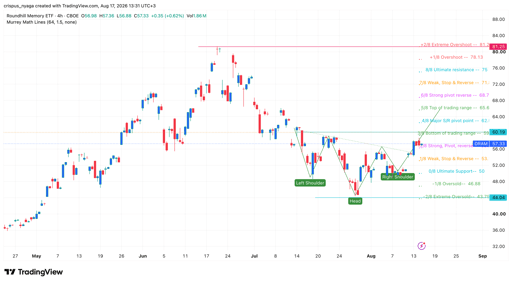
- It has formed an inverted head-and-shoulders pattern, pointing to more gains.
The Roundhill Memory ETF (DRAM) continued its strong uptrend today, August 17, helped by the ongoing rebound of top companies in the industry. DRAM jumped to $60, its highest level since July 15 this year.
Top memory stocks are rebounding
The DRAM ETF has become the most successful ETF launches this year. Launched in April, it has accumulated over $24 billion in assets, with its daily trading volume being in a strong uptrend.
DRAM has rebounded in the past few days, helped by the ongoing surge of its key constituent companies. Samsung Electronics, the biggest constituent, jumped to 274,500 won on Monday, its highest level since July 22nd. It has jumped by 45% from its lowest point this year.
SK Hynix stock has jumped to over 1.645 million won, up substantially from the YTD low of 1.24 million.
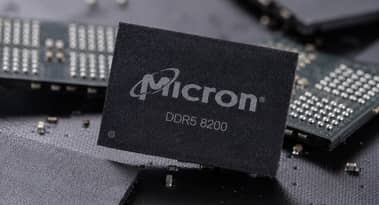
In Japan, Kioxia Holdings jumped to 61,840 yen, its highest level since July 23rd. Other US memory companies like Micron, SanDisk, and Western Digital have also soared.
The ongoing rebound has coincided with the recent rescue of Situational Awareness, a top hedge fund that lost billions of dollars. Traders have bought this dip since one of the biggest sellers has been removed from the market.
Most importantly, these companies and their customers released strong financial results, demonstrating that demand is rising. For example, Micron’s third-quarter revenue jumped to $40 billion, with the company expecting it to jump to $50 billion in Q4.
SanDisk’s revenue jumped by 51% QoQ to $8.9 billion, with its annual figure soaring by 175% to $20.2 billion. Western Digital’s revenue soared by over 43% YoY to $3.75 billion.
In addition to this, these firms are working to prevent the boom-and-bust cycle that has characterized the memory industry in the past. In this, they are entering long-term contracts with clients, setting the floor and ceiling prices of their products.
At the same time, there are signs that these companies are trading at bargain prices. Seeking Alpha data shows that Micron trades with a forward price-to-earnings ratio of 13, while SanDisk has a multiple of 7.64%. Western Digital has a forward PE ratio of 25.
READ MORE: Why Samsung and SK Hynix's record AI profits aren't proving enough for investors
These multiples are not all that big for companies demonstrating this revenue growth. Most notably, companies are intensifying their spending, with the WSJ estimating that big-tech names are spending $3 trillion more than it seems as they are putting their numbers in off-balance-sheet instruments.
DRAM ETF technical analysis
DRAM ETF chart | Source: TradingView
Technicals suggest that the DRAM ETF has made a strong rebound in the past few weeks. It is in the process of forming an inverted head-and-shoulders pattern, a common bullish reversal sign. The fund has also moved above the 50-period moving average and the strong, pivot, reverse level of the Murrey Math Lines tool.
Therefore, the path of the least resistance for the fund is bullish, with the next key level to watch being the Major S/R pivot point of $62.

Wall Street is about to lose a $1.1 trillion buyer: why stocks could get bumpier

Lloyds share price forms a risky pattern as insiders sell, risky pattern forms

Vodafone share price: Technicals point to a jump to 135p as turnaround continues

US CPI data this week could influence Fed rate decision: what investors must know

Jensen Huang sees AGI arriving with OpenAI's Astra: 3 stocks investors should watch
No results found
Loading articles...
Failed to load articles. Please try again.