
SK Hynix stock rises in premarket on $28.6B share buyback: why its cash pile matters
AI Sentiment: 78/100 Bullish
This score is generated through AI-driven analysis of the article's content.

powered by

Buy SK Hynix. The $28.3B buyback/cancellation (3.3% of shares) plus raising payout target to “over 50% of cumulative FCF” is management committing cash to shareholders, not just talking. With ~69T won net cash, the company can keep returning capital while still funding AI memory demand. This should re-rate the stock as a “cash-return AI winner,” especially if Q3 confirms special-dividend/sustained buybacks.
Key Risk: AI memory demand slows faster than expected, cutting free cash flow and forcing SK Hynix to pause buybacks.
Buy Micron versus SK Hynix. Micron already pledged to return 100% of free cash flow, so it’s the cleanest expression of the capital-return theme. If the market starts rewarding “shareholder cash return” across memory, MU should outperform as investors rotate from valuation fears into a more certain payout profile.
Key Risk: Micron’s memory pricing or margins deteriorate enough that it can’t sustain the 100% free-cash-flow payout.
- SK Hynix will buy back and cancel 40T won, or about $28.6B, of its own shares.
- The company plans to return more than 50% of cumulative free cash flow.
- Investors have been demanding larger payouts from Korean memory chipmakers.
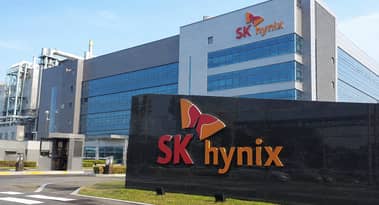
SK Hynix shares rose about 4% in US premarket trading on Wednesday after the South Korean memory chipmaker announced a major share buyback and cancellation plan, offering investors a larger share of the cash generated by the artificial intelligence boom.
The company's board approved a 40.004 trillion won, or roughly $28.3 billion, share repurchase for cancellation.
The buyback will cover 24.07 million shares, equivalent to about 3.3% of the company's outstanding stock, and will run from August 20 through November 19.
The announcement came even as SK Hynix shares fell 9% in South Korea on Wednesday, following a broad sell-off in US semiconductor stocks the previous session.
Despite the latest decline, SK Hynix has more than doubled in value this year, reflecting investor enthusiasm over its position as a major supplier of advanced memory chips used in AI systems.
Investors push for bigger payouts
The buyback comes as investors have increasingly pressed SK Hynix and Samsung Electronics to return more of their cash to shareholders.
Both companies have reported record profits as demand for high-performance memory chips has surged alongside spending on AI data centres.
But investors have questioned why such strong cash generation has not resulted in larger dividends or share repurchases.
The pressure intensified after SK Hynix and Samsung shares retreated from record highs reached in June amid concerns about whether the rapid pace of AI spending can continue.
SK Hynix said its "intrinsic value — underpinned by its business competitiveness, robust cash generation capability, and mid-to-long-term growth potential — is not fully reflected in its current stock price."
The company also raised its shareholder return target, moving from its previous commitment to return "within 50% of cumulative FCF" to "over 50% of cumulative FCF" through share repurchases, cancellations and dividends.
The company said it was also considering additional options, including special dividends, with further details expected alongside its third-quarter earnings report, likely in late October.
Cash pile comes under scrutiny
SK Hynix had approximately 69 trillion won in net cash at the end of the second quarter, giving it substantial financial capacity to return capital while continuing to invest in its business.
Some investors have argued that maintaining such a large cash balance could send the wrong signal at a time when the company is generating strong cash flows from AI-related demand.
Any decision to increase shareholder distributions could provide the "clearest signal" that management believes the AI boom represents a structural rather than cyclical shift, according to Templeton Global Investments portfolio manager Yiping Liao, who spoke to Bloomberg earlier this month.
"If you think there's less cyclicality, you don't need so much cash on your balance sheet," Liao said.
"And we know that they're going to earn a phenomenal amount of cash this year and next year."
SK Hynix seeks to close payout gap with US peers
SK Hynix's move also highlights the growing gap between shareholder returns offered by South Korean chipmakers and some of their international competitors.
Samsung and SK Hynix currently target shareholder distributions equivalent to about half of free cash flow.
By contrast, US memory chipmaker Micron pledged in June to return 100% of its free cash flow to shareholders.
The scale of SK Hynix's latest buyback could therefore mark a significant shift in how the company balances investment in AI-driven capacity with capital returns.
"The size of this buyback is a strong signal from SK Hynix and delivers something investors have been calling for, putting its growing cash pile to work and increasing shareholder returns," said Josh Gilbert, a lead analyst at eToro in a Dow Jones report.
AI demand remains central to the story
The buyback does not change the fundamental investment case around SK Hynix, which remains closely tied to the strength of the AI semiconductor cycle.
The company is one of the leading suppliers of high-bandwidth memory used alongside advanced AI processors, making it a major beneficiary of the expansion of data-centre infrastructure.
However, the sharp swings in semiconductor stocks this week show that investors remain sensitive to concerns over valuations and the sustainability of AI spending.
SK Hynix's decision to commit more of its cash generation to shareholders could provide support for the stock if investors become increasingly convinced that AI demand will remain strong.
Further details on the company's capital-return plans are expected with its third-quarter results, when investors will also look for signs that the underlying AI memory boom remains intact.

S&P 500 Index, VOO, SPY ETFs: Why US stocks are poised to surge further

Why is $100 oil becoming a bigger threat to the FTSE 100 than investors think?
Micron and SanDisk up nearly 2% premarket, but one risk is getting harder to ignore

ASML stock gains as Samsung, TSMC High NA EUV adoption boosts outlook

Dow futures plunge more than 400 points: 5 things to know before Wall Street opens
No results found
Loading articles...
Failed to load articles. Please try again.