
Nasdaq futures plunge 200 points: 5 things to know before Wall Street opens

AI Sentiment: 28/100 Bearish
This score is generated through AI-driven analysis of the article's content.

powered by

Buy AVGO ahead of earnings: the stock is the cleanest way to play AI infrastructure demand, and the market is already pricing a big move. If AVGO shows custom-chip growth and durable cloud partnerships (the exact checklist investors want), it confirms the AI spending cycle is still intact even with higher yields.
Key Risk: AI demand disappoints—custom-chip growth slows or guidance implies customers are delaying spend, causing the stock to re-rate lower despite any “beat.”
Sell QQQ into the open: Nasdaq is the most rate-sensitive, and the article flags 10Y yields near 4.8% plus oil back above $95—bad combo for long-duration growth and AI multiples. The market is also bracing for Broadcom earnings as the next “AI reality check,” with options implying ~7% swings, which raises downside tail risk.
Key Risk: Broadcom delivers strong AI/custom-chip growth and guidance, triggering a fast multiple reset that overwhelms the rates/oil headwind.
- Broadcom earnings put the AI trade under fresh market scrutiny.
- Oil near $95 and higher yields revive inflation concerns.
- Dell’s AI server demand offers support for tech stocks.
US stock futures pointed to a weaker open on Wednesday, with Dow futures down 103 points or 0.17%, S&P 500 futures slipping 23 points, or 0.29% and Nasdaq 100 futures falling 200 points, or 0.65% as investors weighed higher oil prices, rising Treasury yields and fresh risks to the AI trade.
Brent crude moved back above $95 a barrel after fresh Middle East tensions raised concerns about supply risks, while the 10-year Treasury yield approached 4.8%, putting pressure on equity valuations.
The focus now shifts to Broadcom’s earnings, Dell’s strong AI infrastructure results and whether the latest technology rally can withstand higher borrowing costs.
5 things to know before Wall Street opens
1. Oil and bond yields return as Wall Street’s biggest risks
The latest pressure point for markets is coming from outside equities.
Renewed US-Iran tensions pushed oil prices higher, with Brent crude climbing above $95 a barrel and WTI moving above $90. At the same time, Treasury yields continued to rise, with the 10-year yield moving close to 4.8%.
The combination creates a difficult backdrop for stocks because higher energy costs can reignite inflation concerns just as investors are looking for a clearer path towards easier monetary policy.
Growth stocks are particularly vulnerable because higher yields reduce the value of future earnings.
Analysts at market research firms noted that the recent rise in rates has shifted attention back towards inflation risks rather than only economic growth.
2. Broadcom earnings become the next AI reality check
Broadcom will report fiscal third-quarter results after Wednesday’s closing bell, giving investors another major test of the AI spending cycle.
Options markets are pricing a move of roughly 7% in either direction, highlighting how much uncertainty surrounds the stock.
Investors are looking beyond headline earnings and want evidence that:
- AI semiconductor demand remains strong
- custom-chip growth can offset competitive pressure
- partnerships with major cloud companies remain durable
- the company can achieve its long-term AI revenue ambitions
Wall Street expects Broadcom to report quarterly revenue of roughly $29 billion.
3. Dell highlights strength in AI infrastructure demand
Dell shares jumped in premarket trading after stronger-than-expected results and an improved outlook, supported by demand for AI servers.
The move offered fresh evidence that companies building the physical infrastructure behind artificial intelligence are still seeing strong demand.
The result is important because investors have recently questioned whether AI spending has moved ahead of actual returns.
4. Nvidia faces a tougher question after the AI rally
Nvidia remains at the centre of the market’s AI debate.
Although demand for its chips remains exceptionally strong, investors are increasingly asking whether the returns from massive AI investments will justify the spending commitments made by technology giants.
The market conversation has shifted from whether companies will buy AI chips to whether those investments will generate sufficient profits.
That debate now extends across the semiconductor industry, affecting companies including Nvidia, Broadcom, AMD and Micron.
5. Labour data and the Fed remain the next market catalyst
Investors are turning towards upcoming employment data for clues about the Federal Reserve’s policy direction.
The labour market remains a key factor in determining whether inflation pressures continue easing or whether policymakers need to keep rates higher for longer.
Analysts at investment firms said markets are caught between strong corporate earnings momentum and renewed macroeconomic risks from energy prices and bond yields.
For Wall Street, the next few sessions will determine whether recent weakness is only a temporary pullback or the beginning of a broader adjustment in risk appetite.

Here’s why Rolls-Royce share price is falling and what may happen next

FTSE 250 hits one-month low: why UK markets are suddenly under pressure

Why Microsoft stock could see upto 20% more upside despite gaining 30% since earnings
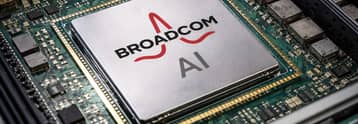
Broadcom options price a 7% earnings swing: will AVGO hit $400 or fall below $343?

Dell stock soars on blowout earnings, outlook: why analysts see a major rerating
No results found
Loading articles...
Failed to load articles. Please try again.