
Why Nvidia stock is slipping over 3% on Monday

AI Sentiment: 35/100 Bearish
This score is generated through AI-driven analysis of the article's content.

powered by

Buy NVDA. The news isn’t just “investing more”—it’s deepening Nvidia’s role in the AI buildout so customers can finance power/data-center spend that ultimately buys Nvidia GPUs. The SpaceX Vera Rubin commitment plus potential $500B AI infrastructure funding talks point to continued demand visibility. If Nvidia is helping fund the bottleneck (power + data centers), orders should hold up into the Aug 26 earnings window.
Key Risk: A financing/infrastructure slowdown (or regulators forcing changes) that reduces customer capex and breaks the link between Nvidia’s investments and actual GPU demand.
Sell/short AI-infrastructure exposure via high-yield/leveraged credit ETFs (e.g., HYG) or AI/data-center-focused credit risk (CDX-style credit proxies). The “circular” funding concern means some deals may inflate near-term activity while concentrating risk in a small group of tech backers. If sentiment turns, credit spreads widen first, hitting leveraged lenders before equity demand data shows it.
Key Risk: Credit stays calm because infrastructure funding actually accelerates and defaults remain low, keeping spreads tight.
- Nvidia slipped after a reported multibillion-dollar investment in Lancium.
- The deal adds to scrutiny over Nvidia's growing investment activity.
- Investors will scrutinize Nvidia's August earnings for evidence of sustained growth.
Nvidia NVDA shares slipped on Monday after reports highlighted the chipmaker's expanding role in financing and investing across the artificial intelligence infrastructure buildout.
Nvidia stock fell over 3% to around $217 in afternoon trading.
The reported Lancium investment added to investor scrutiny of Nvidia's growing activity across the artificial intelligence supply chain, as the company increasingly uses its cash to invest in businesses connected to the AI infrastructure boom.
The broader market was little changed as investors monitored developments in the Middle East.
The S&P 500 traded around the flatline amid growing doubts over whether the US and Iran will reach a lasting resolution to their conflict in the near term.
The Nasdaq Composite and Dow Jones Industrial Average were also little changed.
The three major US indexes entered Monday after posting their strongest weekly performances since April, with the S&P 500 ending the previous week at a record closing high.
Reported Lancium investment draws attention
Technology-focused news outlet The Information reported Friday that Nvidia has agreed to invest $2 billion for a 20% stake in Lancium, which is backed by investment company Blackstone.
Nvidia also has the option to invest an additional $1 billion if certain milestones are met, according to the report.
Lancium is the power-infrastructure developer behind the Stargate AI campus in Texas, a project involving OpenAI and Oracle.
The Lancium investment is part of a broader expansion of Nvidia's investment activity.
FactSet data show the company made 66 private-company investments across 2025 and 2026.
Nvidia's financing role expands
The Lancium report comes alongside a separate development highlighting Nvidia's growing role in financing the wider AI infrastructure buildout.
The Financial Times reported that some of the world's largest financial groups are working with Nvidia to assemble a $500 billion funding package for AI infrastructure development.
A consortium, including Apollo Global, Blackstone, BlackRock, Brookfield Asset Management, Goldman Sachs, and KKR, is entering a partnership with Nvidia to invest in the AI buildout, six people briefed on the talks told the Financial Times.
The deal could be announced as soon as Monday, the report said.
The partnership would underscore Nvidia's efforts to help raise capital for itself and its customers as companies build the chips, power infrastructure, and data centers needed for the AI boom.
Nvidia has also provided financial backing to help AI partners raise debt in capital markets.
Such arrangements can support demand for Nvidia's products by helping its customers finance infrastructure purchases.
However, the interconnected nature of these transactions has raised concerns about concentrated risks within the AI infrastructure market, particularly as Nvidia becomes involved not only in supplying chips but also in helping finance the ecosystem that purchases them.
SpaceX deal reinforces Nvidia's position
Nvidia has rallied over the past week as investors regained confidence in its position in the artificial intelligence semiconductor market.
One recent source of support came from Elon Musk's SpaceX.
During SpaceX's latest earnings call, Musk said the company had decided to build its AI infrastructure exclusively around Nvidia's Vera Rubin architecture, calling it the best architecture.
The commitment reinforced Nvidia's position as a preferred supplier for large-scale AI infrastructure and eased some concerns over competition from rival chipmakers and custom-designed processors.
Nvidia's recent valuation has also attracted attention after the stock's earlier pullback.
Morningstar said Nvidia now fits the profile of a growth-at-a-reasonable-price investment and maintained its $280 fair value estimate.
Nvidia earnings in focus
Investor attention is increasingly turning to Nvidia's earnings report, scheduled for August 26.
Analysts expect earnings per share of $2.09, representing 98.6% growth from a year earlier, and revenue of $91.8 billion, up 96.3% year over year.
Beyond the headline figures, investors are expected to focus on management commentary about customer demand, order trends, data-center spending, and adoption of next-generation processors.
Nvidia's expanding investment activity is likely to remain another area of focus as investors assess whether such deals are helping strengthen the AI ecosystem and ultimately supporting demand for the company's chips.
Investors are also expected to scrutinize so-called circular AI deals, in which technology companies invest in AI startups or infrastructure projects that subsequently use funding to purchase chips and cloud services.
The structures have drawn scrutiny because they could potentially inflate demand if spending remains concentrated among a relatively small group of technology companies.
The reported Lancium investment, alongside Nvidia's broader financing initiatives, therefore adds another dimension to the debate over the company's role in the AI boom.
Nvidia is no longer simply supplying the chips powering the buildout. It is increasingly helping finance and develop the infrastructure required to deploy them.

Nikkei 225 Index outlook: top catalysts for Japan stocks this week

Kospi Index at a crossroads as Samsung, SK Hynix leverage bets reverse

How Meta’s $18B teen safety settlement could reshape social media regulation
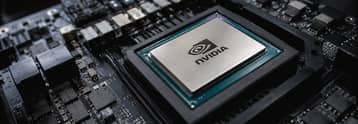
Nvidia is using its balance sheet to fuel the AI boom. Is it a double-edged sword?

Dow holds weekly gain as Warsh inflation warning lifts rate hike bets
No results found
Loading articles...
Failed to load articles. Please try again.